EN
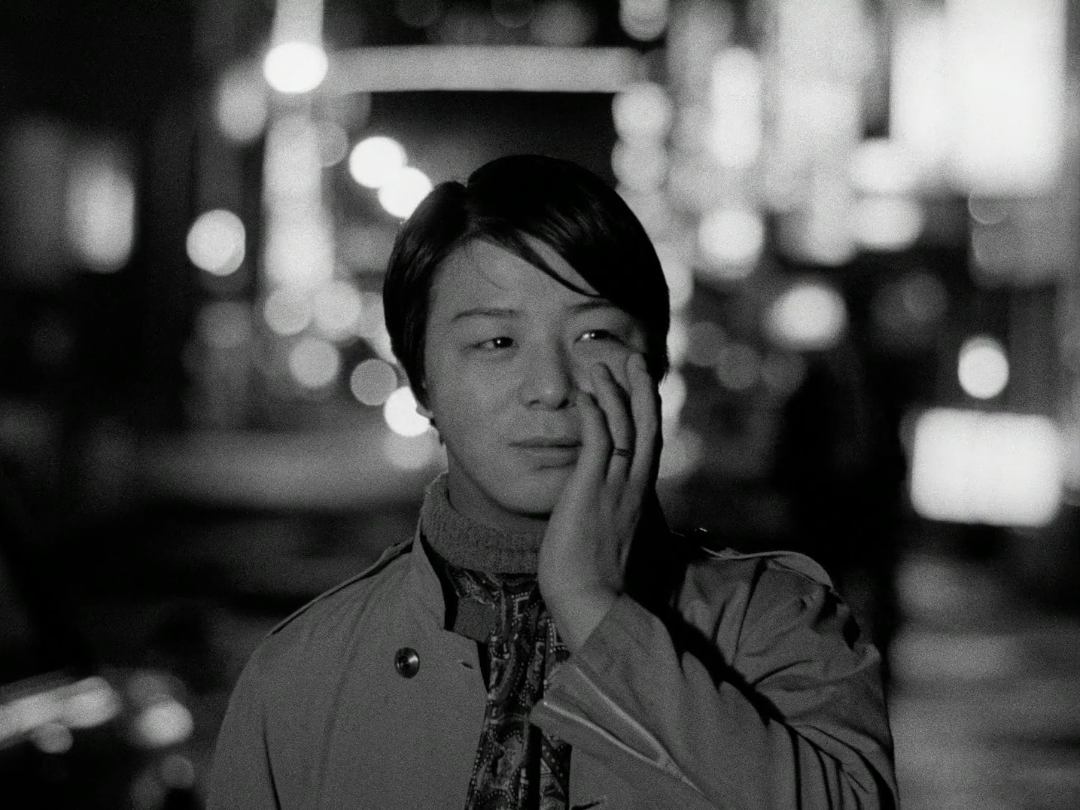
“[In] this project, my creative intent was to disturb the perceptual schema of a dualistic world dividing fact from fiction, men from women, objective from subjective, mental from physical, candidness from masquerade, and tragedy from comedy. Of course the subjects I took up were gay life and the student movement – since it was made around the same time as For My Crushed Right Eye, the material is probably similar. But in terms of form, I dismantled the sequential, chronological narrative structure and arranged past and present, reality and fantasy on temporal axes as in a cubist painting, adopting a fragmented, collage-like form that quoted from literature, theater, painting, and music old and new from both East and West.
While I was not clearly conscious of it at the time, this effort connects with the concept of the postmodern that appeared later. In a sense, this kind of rejection of the ordered and arranged world of the dualistic law of perspective I am talking about is a way to start bringing modernity into question. Moving in that direction, the modern in my case breaks down on one level of the fiction at the point it is fully analyzed. More than criticizing the modern on the basis of the premodern, the concept in Funeral of Roses was to advance and rupture it by investigating it thoroughly.”
Toshio Matsumoto