

The Spirit of a Moment
A Conversation with Viola Stephan
Of all the filmmakers to receive retrospectives at the Play-Doc International Film Festival in recent years, Germany’s Viola Stephan is the least known. And while discovering forgotten directors is one of the joys of attending this small but smartly-curated nonfiction-focused festival – which takes place each May in picturesque Tui, Galicia – Stephan’s obscurity presents a unique challenge for critics and historians who may assume that the story of art cinema of the 1990s, and of films from that era about post-Soviet culture and the sociopolitical currents between Germany and the former USSR, has already been written.
Stephan’s films upend these assumptions and add crucial context to an oft-overlooked period of Russian history in which the shift from communism to unregulated capitalism begat new forms of social and economic inequality. Inspired by a student trip to the Soviet Union in 1969, Stephan cut her teeth making films about the region for German television in the 1980s, before turning to feature filmmaking in 1991 with Die Reise von St. Petersburg nach Moskau, which traces the titular route through encounters with Soviet civilians and glimpses of everyday life during the waning days of the Cold War. With this film and its follow-up, 1992’s Kriegsende, a similarly methodical depiction of Russian immigrants and refugees living in Berlin, Stephan forged a fluid style of social portraiture that recalls some of the earlier work of Ruth Beckermann while anticipating Chantal Akerman’s observational study of the same Eastern Bloc states in 1993’s D’est.
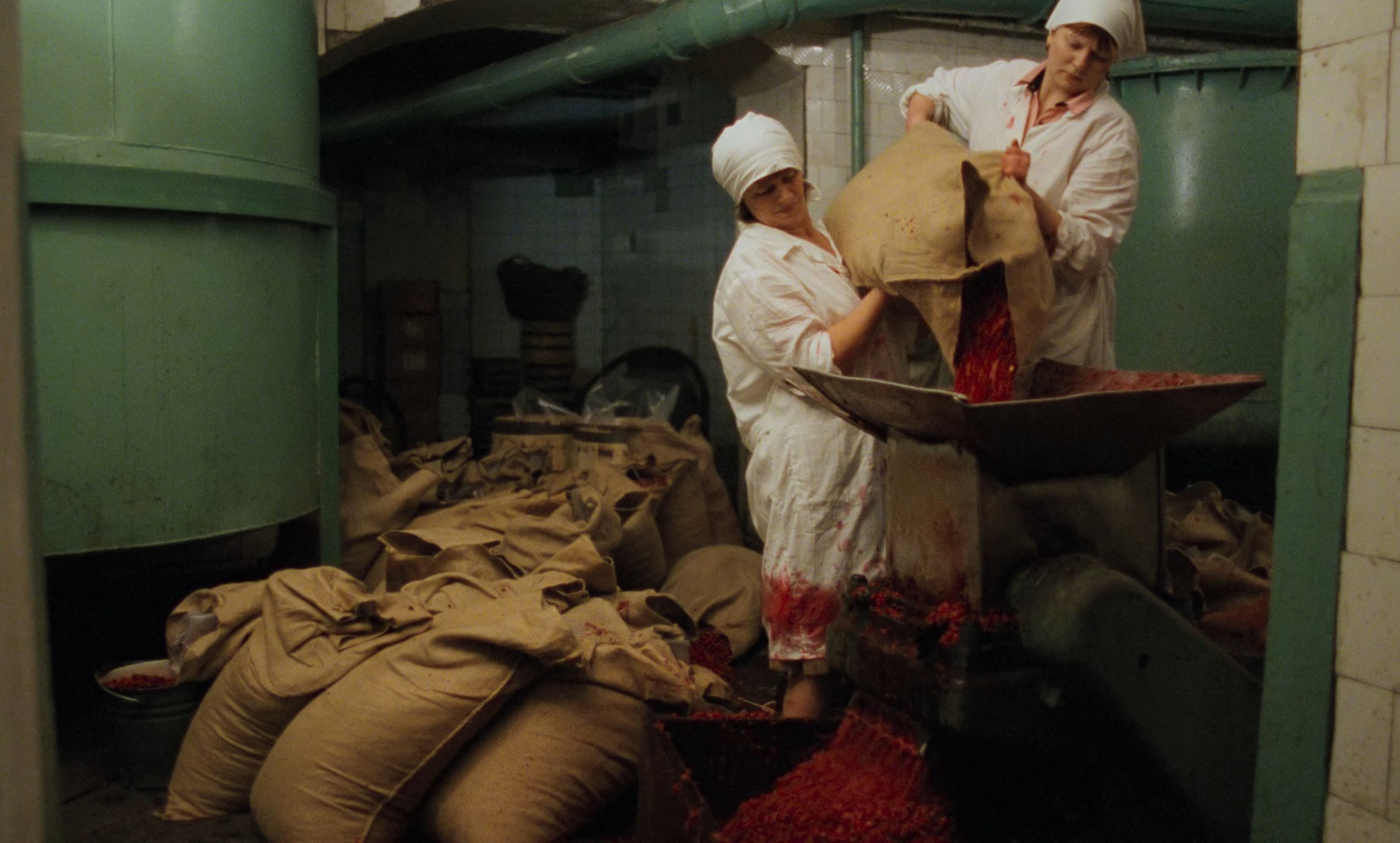
Beginning with 1994’s Silesia, Stephan launched a long-term partnership with Russian documentarian Victor Kossakovsky, who served as cinematographer (or co-cinematographer) on the final three entries in what has retroactively been dubbed Stephan’s Interim project. (Stephan, for her part, would produce Kossakovsky’s 1997 feature Wednesday 07.19.61.) These films have a slightly looser feel than Stephan’s first two outings, due in no small part to Kossakovsky’s exploratory camerawork, which breaks from the strict formalism of the earlier films to more freely observe such settings as a rehearsal room for a Polish-German orchestra in Silesia; a cellar in a former monastery where women make pickles and preserves in Borovichi (1995); and any number of cafés, beauty salons, and domestic spaces in Damenwahl – Szenen aus dem Abendland (1999). If the latter film, which follows a group of Stephan’s female friends as they adjust to pre-millennial bourgeois mores, feels the most modern, it’s not only because of its prescient portrayal of a kind of neoliberal feminism, but because of the director’s ambivalent attitude towards her subjects. Like the entirety of the Interim project, Damenwahl continues to evolve and take on new meaning with each passing year – a fact with which even its author is still coming to terms.
Jordan Cronk: What brought you as student to the Soviet Union in 1969?
Viola Stephan: It was very unusual. I was living in West Berlin at the time and West Berlin was a separate unit – it was not quite the same as even the rest of West Germany. So it was particularly sensitive for us to travel there. Most of the group didn’t even have passports. I had a passport because I’m from Heidelberg, but for a student group from West Berlin to go to Russia was very unusual. We were the first group of students to go there.
My main pursuit was Slavonic studies, which means I was studying literature and East European history. Linguistics was my second subject. It was the 1968 period, so I was surrounded by the student revolution, and my father was a young professor at a free university in Berlin. So I was in it from various sides. I was surrounded by people who studied Russian because they wanted to read the Soviet newspaper – they were kind of pro-communist. But that wasn’t really my thing; I was interested in literature and history. So there were these very active students who organized a trip to the Soviet Union for a language course at the University in Leningrad. It’s difficult to imagine with how people live today, but we went by train and had to wait at the border for a few days to get let in. We were in Leningrad for five weeks in some student hostel for foreigners, and you can imagine how the Russians lived. It was terrible. There were bed bugs and the shower was in the basement, and we lived on the fifth floor. They had never seen a foreigner. There were no tourists. But we were shown around. After Leningrad, we went to what is now Ukraine, to Odessa and Kiev.
When it comes to my life, that was a crucial experience. I was very surprised when we came back that my colleagues thought they were going to do communism better than the communists, while I came back thinking that communism is the lie of the century. I couldn’t believe that they still thought it was a great idea. We saw what was going on. I don’t want to describe all the experiences, but I knew that I had to get out of there.
And then you studied in London?
Yeah, I got one of the only scholarships that my university offered. So I studied at a Slavonic institute in London, and that was important for my whole fringe attitude towards Russia. When I don’t like something, I don’t try to change it. I just find an exit strategy. This is why I’m in Paraguay now.
What was interesting was that the institute was full of immigrants, which in Berlin we didn’t have at all. It was just after the ’68 period in Prague, after the Russian invasion, so we had a lot of immigrants from Czechoslovakia. And all the teachers were immigrants. My teacher, for example, was a Polish poet who had immigrated, and my tutor was this Jewish woman born in Egypt – something weird like that. But this is where I learned to work and research, and eventually I got my PhD in Russian symbolism. I was one of the only PhDs to come out of that program because everyone else was on strike against the universities in Berlin, whereas I was enjoying swinging London and working on my Russian symbolism.
People often ask me how I was able to establish trust with the people in my films, and it’s because of what I knew about Russian literature, which was basically forbidden. I didn’t have access to Russian literature in the Soviet Union, so in addition to the British Museum in London, where I did most of my research, I spent time in Paris at the Bibliothèque National, as well as in Helsinki, which has the best Russian library outside Russia. So knowing about all this stuff was like having a code word. And because of this I was immediately accepted in certain circles. A KGB officer once told me that it was a big advantage not being leftist. I loved my communist friends, but I didn’t like communism. I don’t like the system. So I had a clear position in the eyes of the Soviets, whereas they could never understand where these lefties were coming from.
So how does one go from studying Russian history and literature to cinema?
I always knew I wouldn’t stay in academia. It was too boring [laughs]. But I had written my thesis on Russian symbolist drama, which is basically a lyrical drama for reading, not staging. And I was interested in moving to Warsaw; my second language is Polish. But it was impossible to get a visa. So I found a theatre director in Poland and got what today you would call an internship.
It was the best time to be in Poland, in ’76 and ’77. I was like Forest Gump, always in the middle of things. I had a pass from the Minister of Culture that allowed me to attend any theatre in Poland without buying a ticket. The first row at these events were always reserved for party members, but the party members never showed up, so I could sit wherever there was a free seat. And as part of this internship I could go to the rehearsals and have access to the actors and theatre club, which is where you ate and partied every night.
My partner at the time was a sculptor; he died but he’s the father of my son. He had an exhibition in New York in 1970, and I came to meet him straight from Warsaw. We only came for the exhibition, but we liked it there so much we decided to stay. I was so fed up with Berlin. By this point we were more in the art world, and this whole subsidized lifestyle in Berlin bothered me. That’s how West Berlin was made attractive; nobody wanted to go to West Berlin because the Russians were around. People were scared, so you’d get extra money if you went to West Berlin. We call it Zittergeld, or “tremble-money,” because you were scared of the Russians. And you didn’t have to go the army if you moved to West Berlin, so people came to avoid that as well.
Again, like Forest Gump, I was there during the best time for the New York art world, the late ’70s and early ’80s. We knew Laurie Anderson, who had stayed in our studio when she had come to Berlin, and we lived for a time with Gordon Matta Clark. He was a close friend, as was William Copley. I did a play with Bill. That’s how I came to make a film with Robert Rauschenberg [Ein Amerikaner in Moskau: Robert Rauschenbergs Kunstmission, 1989]. So that was our little trio of friends. But people were always just around, like Warhol and Julien Schnabel. You should see my photographs. At the time I was testing the new 400 ASA film stock, so I took a bunch of photos during this era.
Very quickly I was asked to direct an off-Broadway play. So I adapted a work by a Polish writer that I found interesting. I ended up doing three plays in New York, and they always got nice reviews, in The Village Voice and other papers. It was a swinging time, you know. Gallery openings were still fun, with lots of booze. Not like today, where you get a plastic cup with some water.
One of the plays I did was called Lovely Rita, which was adapted from a text by a well-known German playwright named Thomas Brasch. And there was a sequence in the play that called for a film scene, so Gordon Matta Clark’s wife, Jane, suggested we go to NYU for a crash course in film production. This was when Gordon was fighting pancreatic cancer, so Jane couldn’t do it with me, but I registered for these film courses just so I could shoot this small 16 mm film for my little play. We did it at the Theater for the New City and it got quite a bit of attention. So that’s how I came to film – through the theatre.
What was the play about?
It was about a young orphan girl living in East Germany during the Soviet occupation. It deals with abortion, and I cast a black actress named Mimi. I always thought that black and white in America didn’t really matter. I didn’t realize how stratified the United States is. I learned this quickly and ended up making a television film about it called American Aristocracy (1985). German television in the ’80s was still really good, and the station I was working for, WDR [Westdeutscher Rundfunk], was very supportive, so I spent a lot of the decade making films about Russia and America for German TV. I only made films that felt to me like quests, where I myself don’t know what’s coming. That’s not possible today because everyone wants a script. You didn’t write scripts back then. I would write a one-page outline of my idea.
How did the opportunity to make Die Reise von St. Petersburg nach Moskau come about?
By the end of the ’80s I was fed up with the television industry. A new generation of commissioning editors had come in who knew nothing about filmmaking, and I had less and less control. But in Germany, every film, even theatrical films, are made with television money. It’s called a Kino-Koproduktion. So for this film I decided to pursue film funding so I could tell the television people, sorry, this is a film for the cinema and you’re allowed to show it, but you’re not telling me how to shoot it. With these films, I asked myself: how can I experience the least amount of outside influence? I need maximum freedom. Damenwahl is basically about this same thing: maximum freedom.
Can you tell me a little about the conception of Die Reise von St. Petersburg nach Moskau? Was the goal simply to document this particular post-Soviet community?
Absolutely. But because this was a Mosfilm production, I had access to these fantastic technicians. So I was able to approach documentary in a different way. For example, I had the idea to do it in sync sound, which wasn’t common for documentary filmmakers at the time. It was mixed entirely with three tapes. When Victor [Kossakovsky] came into the picture, it was different; he likes to be creative with the sound. But I liked the idea of utilizing these fantastic artisans for a documentary, just to see what happens. And it was difficult for them at first because they were used to setting up a shot for hours, and having five thousand assistants and trucks full of lighting equipment. But they ended up loving it; it was a nice way of life, except for the fact that we didn’t have much food [laughs]. There were also logistical challenges. We had problems with the officials; they even X-rayed the negatives. It took a lot of time and patience.
How did you come to the form of these early films? They’re observational, but you also incorporate interviews – but not talking head interviews…
I think one reason I always feel apart from these film people is because I’m not an artist. I don’t consider myself an artist. I’ve had an interesting life, but it’s not like I went to film school and now I’m looking for a subject. My life is not research for a film. It’s the opposite. It’s my life and then maybe it’s a film. For me, my films were an opportunity to show people these things that I’ve experienced, because nobody believed the places I had been and the things I had done. My motive is not that I have to express myself. That’s the last thing I’m interested in. If I want to express myself, I’ll write a book or something. But it’s not like if somebody likes or dislikes my films that I don’t care. I’m glad if two people like one of my films and understand what I want to convey. But if they don’t, my self-esteem is completely unconnected with that.
I was very lucky that my family, who even though they had completely different ideas about life than me, was always extremely supportive. I would always say to my production managers, if I wanted to be rich I would have married for money. I would never have to deal with production managers or television stations. Instead, I always delivered what I promised I’d deliver to anybody who put money into my work. Just don’t come to me with this female point of view nonsense.
One thing I found interesting about my initial viewings of Die Reise von St. Petersburg nach Moskau and Kriegsende is how much they reminded me of Chantal Akerman’s D’est. But then I remembered that D’est was made after both of those films.
Yeah, I think I first saw D’est around the time it premiered.
So without that reference point, I’m curious what, if any, cinematic influences you brought to these films?
Oh, none! I’d never seen a documentary in all my life. I didn’t even have a TV for most of these years – I was moving too much. I remember when I made my first film about Russia in 1981, the commissioning editor from Cologne came to me when the film was ready to be mixed and said, “Where’s the text?” And I said, “What text? It’s a film; this isn’t radio.” And he said, “But the narration…” And I said, “We don't have narration.” He was completely confused.
Were you not a cinephile?
I went to the movies, but I went to things like Star Wars (1977) [laughs]. But my friends and I would see certain arthouse films. We would wait for the next Godard – things like that. But I didn’t like Truffaut. I never liked the German filmmakers, like Wenders and Schlöndorff. I did like Herzog. I always looked at his films. But I’m not judging these filmmakers. It’s all perfectly fine; I just didn’t want to be part of it. I liked long shots. Borovichi is 98 minutes long and has eighty cuts – each shot averages more than a minute in length. I told the lab I’m not paying the regular price to cut this film, because they charge by the meter. And usually a film has hundreds of cuts. But you could cut my negative in a day.
How responsible was Victor Kossakovsky for the visual language of Borovichi and the later films?
It depends. For example, Borovichi and Sreda were shot at the same time. Sreda has an urban-Petersburg feel, and Borovichi shows the more provincial side. Victor shot both films, but Borovichi was more his home turf. So in terms of style, the films are very much influenced by him. That’s why I gave him a credit for the script of Borovichi. Just like I’m credited with the script for Sreda, which is absurd. These were basically joint projects.
But for Silesia, I had Bogdan Dziworski as my DoP. I liked Bogdan’s films, but he was not the right DoP for me. He shoots with a long lens, and I shoot with a wide lens. He likes to sit in the bushes and shoot from a distance. I don’t do that. I put the camera right in front of you and take it from there.
So when we had all the material on the editing table, Victor, who by that point was involved in the project, looked at it and had different ideas. So Victor and I went back to Silesia and shot additional scenes. Ultimately, I think the combination of styles worked well, but with Bogdan you have to edit. He’s too much of a filmmaker himself. He shoots having in mind how to edit it. And then for Damenwahl, Victor shot the stuff in New York, Petersburg, and some of the Berlin stuff, while the Paris scenes were shot by Thomas Plenert. So there’s a slightly different feel to those scenes.
Can you tell me about the decision to make a film like Damenwahl after four films dealing with history, war, and politics?
I was visiting my theatre producer friend Sandy Martin in California, and at her house I saw a t-shirt hanging up with a Lichtenstein cartoon on the front and that Gloria Steinem quote, “Oh my god, I think I’m becoming the man I wanted to marry.” And I thought to myself, this is basically what sums up our generation. At that time we were coming to the end of the millennium, and this seemed like an idea worth exploring.
The way I was brought up, you have the best education, and you get your PhD. And of course you marry and have children. If the marriage goes wrong, then at least have some sort of education and you have the option to get a job. This wasn’t an option for our parents’ generation. But we had the choice. I had the impression that our generation was the only one in the timeline of humanity that had this option, that we were really free. Before I was thirty, I never thought I would have to make money, even though I don’t come from a rich background at all. My father always said, “You have to do what’s interesting for you, and if you’re good at it, then it will somehow monetize. And then if you invest your money wisely, you can have a certain lifestyle.” That was the mindset at the turn of the millennium. And I thought, “This is going down; this isn’t going to last.”
So instead of going to Russia and America, I figured, let me explore this idea through my friends – friends from throughout my lifetime. I find it interesting that your friends somehow always reflect yourself.
You mention not thinking in feminist terms, but I imagine when you show Damenwahl today, it’s received as a feminist film.
It is, but feminists hated it when it came out! It was the most discussed and debated film at the 1999 Berlinale. There were fights – the feminists were outraged: “Oh, these rich broads!” They didn’t see the context. Women are the only class in history that gave up their privileges without fighting. Usually if people give up their privileges, they fight for them. Only the women were eager to give them up.
And what’s the reaction when you show the film now?
Oh, they love it. The young people think it’s fantastic; the new generation understands the film much better than the people back then. That’s why I’m really happy that we did these digitisations. As for the Russian films, when I show them today, someone will always say, “I’m so glad I saw that. It’s so interesting to see that Russians are also human beings.” Can you imagine somebody seriously saying something like that?
But as I said, I’m not interested in expressing myself. I’m more interested in documenting a certain period – the space and time of a certain moment. When selecting something to film, I think to myself, what would be interesting in fifty years? I love the scene in Damenwahl with Trixi [Lüpertz] killing the moths. Something about it feels very specific to that place and time. How do you capture the spirit of a moment in time in a scene? If I have a talent, I think it’s the ability to bring the right people together on screen and to capture a moment. I think that’s one reason the films still work today and why people seem to really like them now.
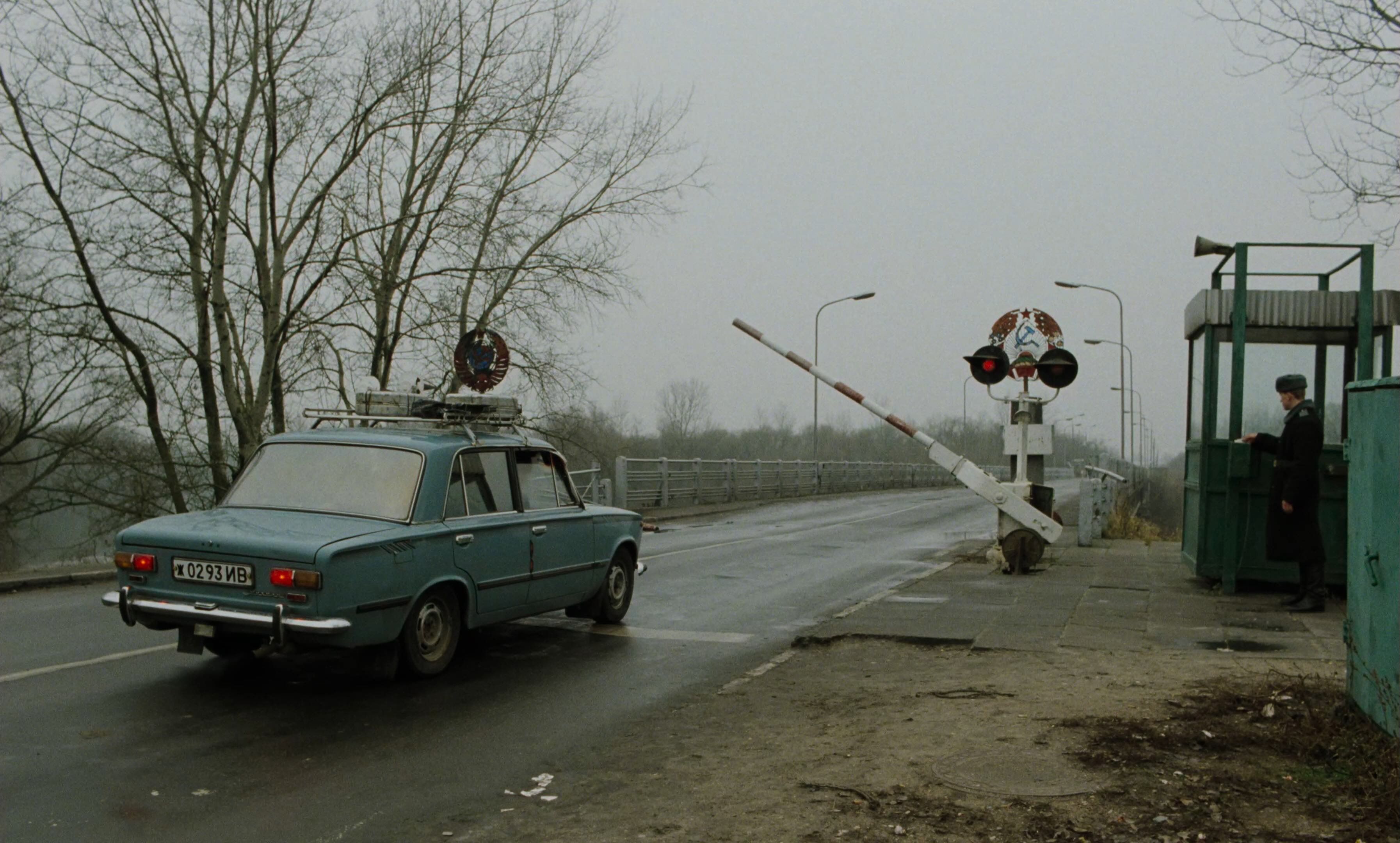
Image (1) from Kriegsende (Viola Stephan, 1992)
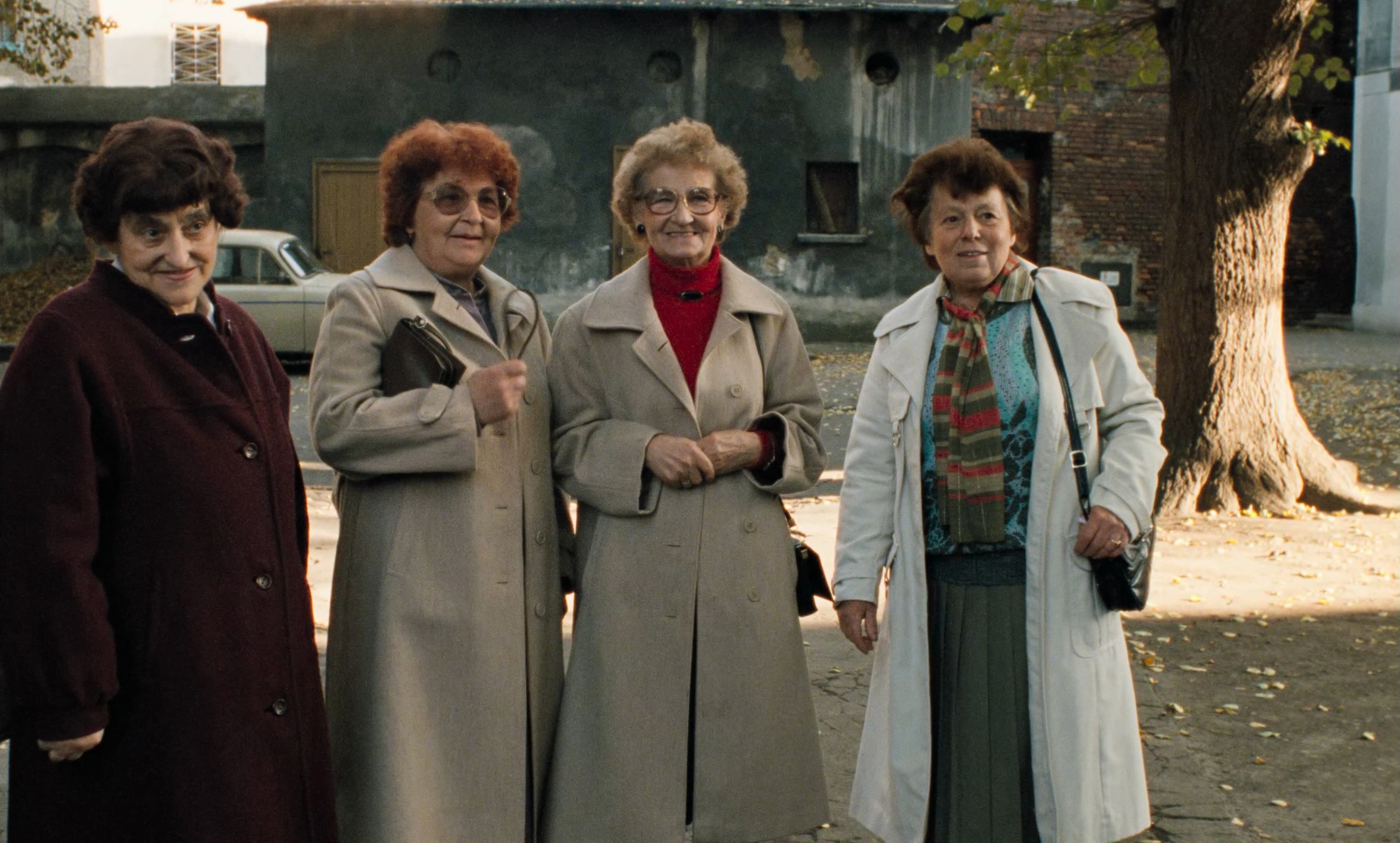
Image (2) from Silesia (Viola Stephan, 1994)
Image (3) from Borovichi (Viola Stephan, 1995)
Images courtesy of © Sreda Film
Many thanks to Viola and Constantin Stephan

