Collections

Curated and occasional collections of texts and film pages.Collections compilées et occasionnelles de textes et de pages de films.Samengestelde en occasionele collecties van teksten en filmpaginas.

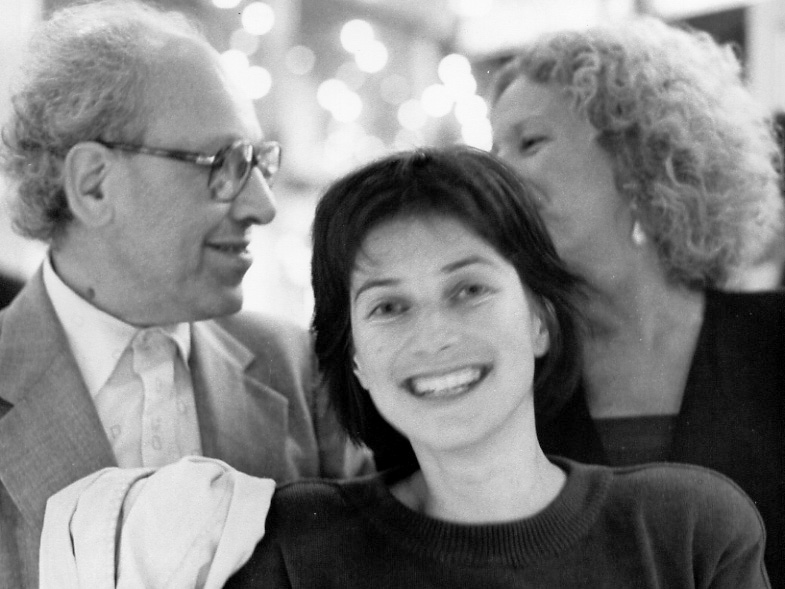
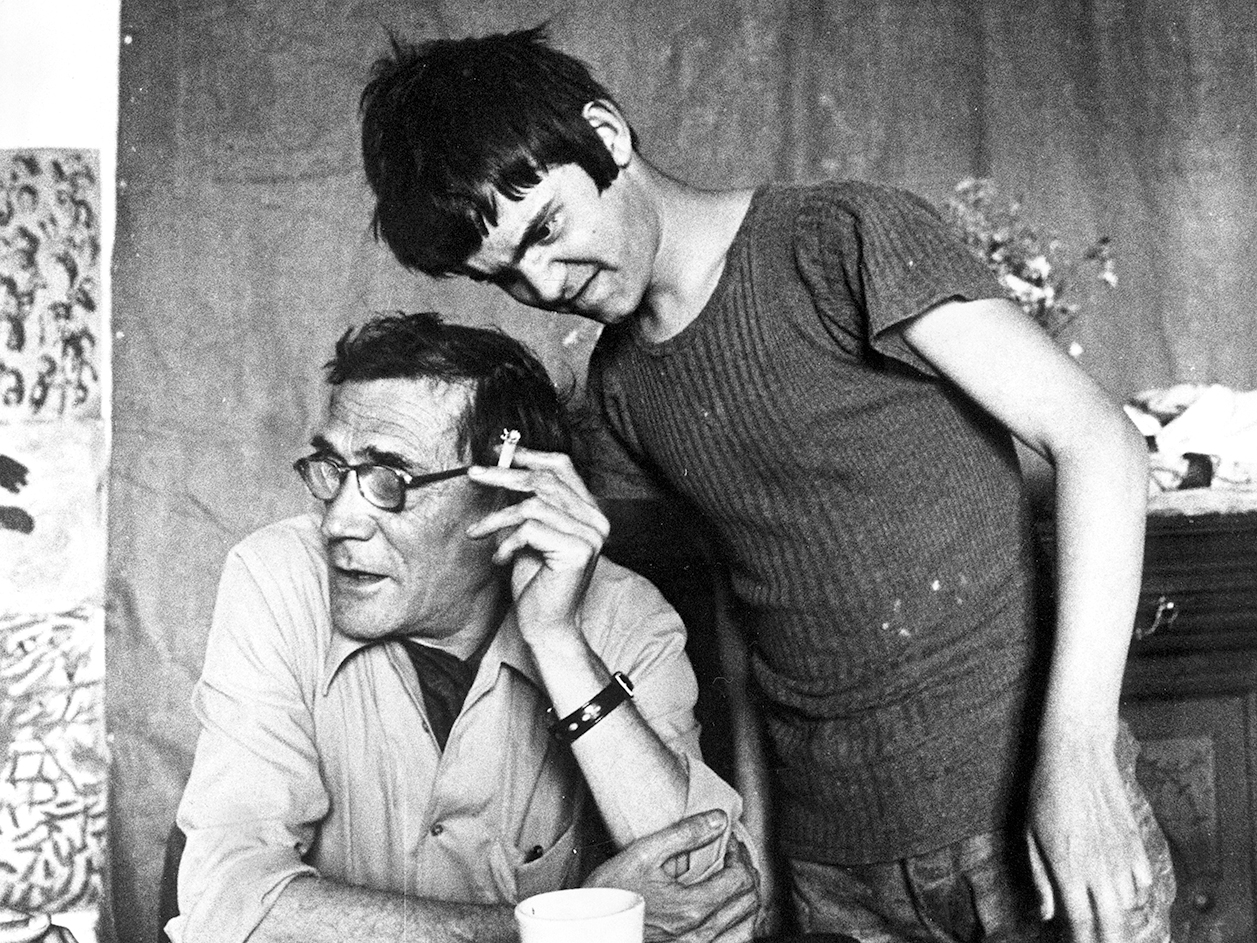
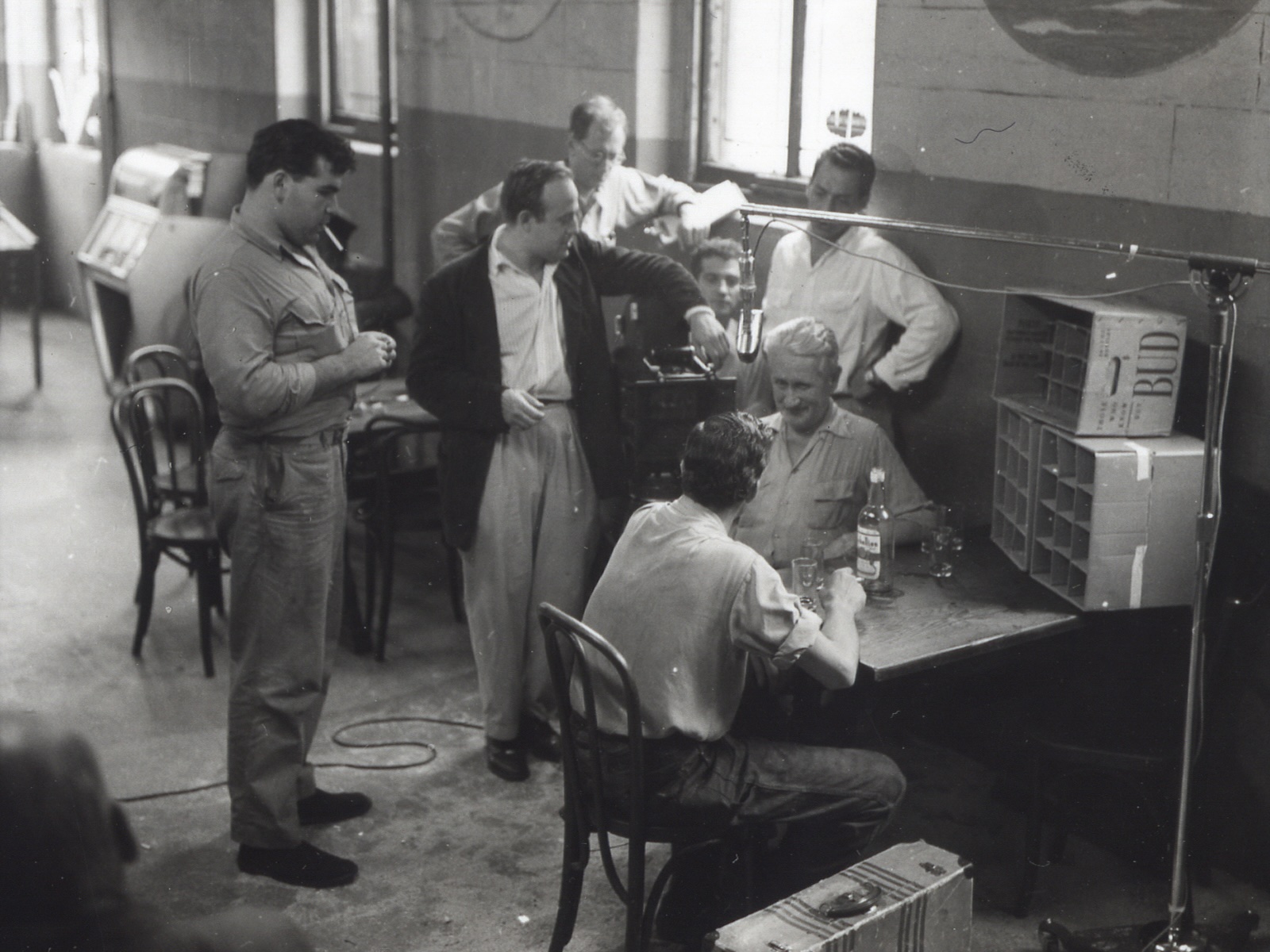
André Delvaux on the set of Rendez-vous à Bray (1971)
A COLLECTION OF 6 texts, 8 film pages, 1 event,
collected by Bram Van Beek
NL FR EN

André Delvaux (1926-2002) is counted among the most important filmmakers in the history of Belgian cinema. Although he started making films relatively late and without a formal education, Delvaux managed to create a rich oeuvre that paved the way for a whole generation of Belgian filmmakers. Delvaux, who according to Luc Dardenne was “the greatest and perhaps the last Belgian filmmaker”, is best known to the general public for the Belgian and international film classic De man die zijn haar kort liet knippen (1966). Admired by filmmakers such as Jean-Luc Godard, Chris Marker and Alain Resnais, his films put Belgian cinema on the map internationally. Aside from his work as a fiction and documentary filmmaker, Delvaux was actively involved in film education. In 1962, he founded the theatre and film school INSAS in Brussels together with Raymond Ravar, where he trained notable Belgian filmmakers such as Boris Lehman, Michel Khleifi, Jean-Jacques Andrien and Jaco Van Dormael among others.

A Reality in Motion

A COLLECTION OF 5 texts, 5 film pages,
NL FR EN

It is rare for an oeuvre of such limited size – two short films, one medium-length film, and one feature, together totalling less than 170 minutes – to have such a great impact and reach within film history. It testifies to the originality, boldness, and artistic freedom with which Jean Vigo (1905–1934) shaped his brief passage through cinema. It is this love for whatever appears before his lens, both people and forms, that makes Vigo’s cinema so unique. “Vigo had such esteem, if you will,” Dita Parlo said in Jacques Rozier’s documentary about Vigo, “a devotion to every human being, to every person, that he tried not to touch them.” It results in a cinema where reality and fiction continually merge in a dynamic of osmosis, where reality is always in motion.

People Passing Through Me in an Endless Procession

A COLLECTION OF 7 texts, 4 film pages, 1 event, 1 news item,
NL FR EN

An artist and engraver, Frans van de Staak (1943–2001) first encountered the power of cinema in a sequence from Michelangelo Antonioni’s Red Desert. He went on to enrol in film school and founded CINEECRI, a journal he distributed himself. Using grant money earned through graphic design, he made a series of short films in the 1970s that laid the groundwork for his cinema: early attempts to transpose texts by writers such as Korneliszoon Poot and Spinoza to the screen. Rather than striving for faithful reproduction, he filmed amateur actors in their effort to give voice to the text, judging takes more by ear than by eye.

A COLLECTION OF 9 texts, 21 film pages, 1 event, 2 news items,
NL FR EN

The year 2025 marked the mournful fiftieth anniversary of the death of Pier Paolo Pasolini. After his death, Jean-Paul Sartre wrote a passionate plea for him, warning against the posthumous moralisation and simplification of his oeuvre, which he considered a threat to the radical complexity of his work and his person. “Do not pass judgement on Pasolini,” he wrote, “do not render harmless what was never meant to be harmless.” This collection of texts follows Sabzian’s recent publication WHO IS ME, a Dutch translation of Pasolini’s posthumous autobiographical text Poeta delle ceneri [Poet of the Ashes]. In that text, Pasolini writes: “No artist in any country is ever free. An artist is a living objection.” In that spirit, this collection gathers several texts on Sabzian dedicated to Pasolini’s films, his writings and his lasting legacy.

Sabzian x Avila

A COLLECTION OF 18 texts,
NL FR EN

Together with Avila, the non-profit film distributor dedicated to showcasing Belgian auteur cinema online and in cinemas, we’re happy to present a curated selection of interviews from our archive with Belgian filmmakers whose work can be watched on Avila. These include, among others, Ellen Vermeulen, Bas Devos, Eric de Kuyper, Boris Lehman, the Dardenne brothers, as well as several founding members of Sabzian. A rich collection of voices that spans more than half a century of Belgian film history.

The Films of Johan van der Keuken

A COLLECTION OF 5 texts, 62 film pages, 2 events, 3 dossiers, 1 news item,
NL FR EN

Johan van der Keuken (1938-2001) was a Dutch filmmaker and photographer. At the age of seventeen, he already made a name for himself with Wij zijn 17 (1955), a photo book of portraits of peers. A year later, he entered the Paris film school IDHEC, where he discovered a growing passion for filmmaking. As a filmmaker, he broke through with experimental documentaries such as Blind kind (1964) and the North-South trilogy (Dagboek, Het witte kasteel, en De nieuwe ijstijd, 1972-1974) in which he depicted increasing global inequality. He made more than fifty films. This collection provides an overview of the available English-language texts on Sabzian about the work of Johan van der Keuken, as well as a complete multilingual annotated filmography.

De films van Johan van der Keuken

A COLLECTION OF 8 texts, 62 film pages, 2 events, 1 dossier, 1 news item,
NL FR EN

Johan van der Keuken (1938-2001) was een Nederlandse filmmaker en fotograaf. Al op zeventienjarige leeftijd maakt hij naam met Wij zijn 17 (1955), een fotoboek met portretten van leeftijdsgenoten. Een jaar later trekt hij naar de Parijse filmschool IDHEC, waar hij een groeiende passie voor het filmen ontdekt. Als filmmaker breekt hij door met experimentele documentaires als Blind Kind (1964) en de Noord-Zuid-trilogie (Dagboek, Het witte kasteel en De nieuwe ijstijd, 1972-1974) waarin hij de toenemende mondiale ongelijkheid in beeld bracht. Hij maakte meer dan vijftig films. Deze collectie biedt een overzicht van de beschikbare Nederlandstalige teksten op Sabzian over het werk van Johan van der Keuken, evenals een volledige meertalige geannoteerde filmografie.

Les films de Johan van der Keuken

A COLLECTION OF 7 texts, 62 film pages, 2 events, 1 dossier, 1 news item,
NL FR EN

Johan van der Keuken (1938-2001) était un cinéaste, photographe et auteur néerlandais. À l'âge de dix-sept ans, il se fait connaître avec Wij zijn 17 (1955), un livre de photographies présentant des portraits de ses pairs. Un an plus tard, il rejoint l’école de cinéma IDHEC à Paris, où il découvre sa passion grandissante pour le cinéma. En tant que cinéaste, il se fait un nom avec des documentaires expérimentaux comme Blind kind (1964) et la trilogie Nord-Sud (Dagboek, Het witte kasteel et De nieuwe ijstijd, 1972-1974), dans laquelle il dépeint l’augmentation des inégalités mondiales. Il a réalisé plus de cinquante films. Ce recueil offre une vue d’ensemble des textes disponibles en français sur Sabzian à propos de l’œuvre de Johan van der Keuken, ainsi qu’une filmographie multilingue complète et annotée.

The Films of Sergei Loznitsa

A COLLECTION OF 12 texts, 16 film pages, 2 events, 1 news item,
NL FR EN

Sergei Loznitsa (1964) grew up in Kiev and studied at the famous film school VGIK in Moscow. In recent decades he has made more than thirty documentaries and feature films. In his documentary work, which is rooted in the rich tradition of avant-garde documentary that is so central to the history of Soviet cinema, he captures, without commentary and with a keen eye and careful editing, a Russia in transition. From his first documentary, his films offer incisive portraits of history – whether through everyday observations, through the editing of found footage, through documenting and re-enacting contemporary events, or employing fictional storytelling. 

Five Artworks that Inspired Apichatpong Weerasethakul's Memoria (2021)

A COLLECTION OF 4 film pages,
COMPILED BY Apichatpong Weerasethakul

On the occasion of his visit to Bozar in Brussels, Apichatpong Weerasethakul selects five artworks that revolve like satellites around his latest film Memoria (2021), films or other works of art that served as an inspiration or influence, thematically or in terms of form.

The Cinema of Apichatpong Weerasethakul

A COLLECTION OF 5 texts, 16 film pages, 2 news items,
NL EN

Thai filmmaker Apichatpong Weerasethakul (1970) is known for, among other films, Tropical Malady (2004) and Uncle Boonmee Who Can Recall His Past Lives (2010), which shows, in Apichatpong’s words, “the relationship between man and animal and at the same time destroys the line dividing them”. His latest film, Memoria (2021), takes place in Columbia, where a deep historical context resonates, foreign to both the main character and the director himself. His films experiment with the dramatic plot structure of Thai television, radio programs, comics and films. He often uses improvised dialogues and non-professional actors, exploring the boundaries between documentary and fiction.

A COLLECTION OF 7 texts, 2 film pages,
NL

Eind jaren zeventig maakte de Belgische theatermaker, acteur en auteur Jan Decorte (1950) twee speelfilms – Pierre (1976) en Hedda Gabler (1978), en enkele televisiefilms – (het verloren gegane) Nature morte (1976) en Witold Gombrowicz: voorvallen, avonturen (1977), een oeuvre getypeerd door filmische spaarzaamheid en lichtheid, gededramatiseerde theatraliteit en een afkeer van het spectaculaire.

Traverser les terres du cinéma

A COLLECTION OF 12 texts, 40 film pages, 2 events, 1 news item,
NL FR EN

Chantal Akerman (1950-2015) est une cinéaste, scénariste, productrice, artiste et écrivaine belge majeure dont la carrière s’étend sur quatre décennies.

Door het land van de cinema

A COLLECTION OF 23 texts, 40 film pages, 2 events, 1 news item,
NL FR EN

Chantal Akerman (1950-2015) was een toonaangevende Belgische filmmaker, scenarist, producent, kunstenaar en schrijver wier carrière vier decennia overspande.

Traversing the Land of Cinema

A COLLECTION OF 12 texts, 40 film pages, 2 events, 1 news item,
NL FR EN

Chantal Akerman (1950-2015) was a Belgian film director, screenwriter, producer, artist and writer born in Brussels.

Heen en weer tussen bioscoopzaal en klaslokaal

A COLLECTION OF 5 texts, 1 event,
collected by Herman Asselberghs
NL

Paradox van de staat van aandacht: de tijd zo intens bewonen dat je hem uit het oog verliest. Het zou er ook een definitie van kunnen zijn: de tijd beleven terwijl je hem vergeet. Zoiets als de (geslaagde) filmervaring. Of een (voorbijgevlogen) lesuur. In 5 essays exploreert filmmaker-lesgever Herman Asselberghs verwantschappen tussen twee aandachtsmachines in volle verandering: de bioscoopzaal en het klaslokaal. 

A COLLECTION OF 12 texts, 55 film pages, 1 news item,
NL FR EN

Danièle Huillet (1936-2006) and Jean-Marie Straub (1933-2022) were a French duo of filmmakers who made about twenty films together between 1963 and 2006. Their partnership resulted in a beautiful and demanding oeuvre, which deeply affected the history of cinema. The work of Straub and Huillet is characterised by a rigorous and uncompromising form, which often involved long takes, minimalistic aesthetics, and a focus on text and performance.

A COLLECTION OF 8 texts, 8 events,
NL FR EN

For eight years now, Sabzian has asked a guest to write a State of Cinema, a text that holds cinema up to the light, an invitation to reflect on what cinema means, could mean, or should mean today. This Collection brings together all the texts of the invited speakers of the past years.

A COLLECTION OF 10 texts, 6 film pages, 1 event,
NL FR EN

The Portuguese filmmaker Pedro Costa made his first film, Blood, in 1989. In 1994, Down to Earth followed, which was filmed in Cape Verde. Costa came back from the island with a number of parcels and letters from Cape Verdeans he had met there, addressed to their relatives and friends who had emigrated to Portugal. His task as a postman brought him to Lisbon’s Fontainhas neighbourhood, where many migrants were living at the time. After this first contact with the inhabitants of the neighbourhood, Costa kept returning there, filming Ossos in 1997, the first instalment in a series of films he would make with the inhabitants of Fontainhas.

Reality Would Have to Begin

A COLLECTION OF 7 texts, 6 film pages,
NL EN

Harun Farocki (1944-2014) was a German filmmaker, author, film critic and lecturer. Many of his works question the relationship between warfare, capitalism and representation. His oeuvre expresses a unique vision in which technical images or simulations, photography and cinema are contrasted with what is known as “reality”.

The Films of Anne-Marie Miéville

A COLLECTION OF 5 texts, 10 film pages, 1 event, 1 news item,
NL FR EN

“The love experience will be reshaped into a relationship that is meant to be between one human being and another, no longer one that flows from man to woman.” This quote from Rainer Maria Rilke, which adorns the end of Lou n’a pas dit non (1994), encapsulates the essence of Anne-Marie Miéville’s quest, which is driven by a universal, imperishable question: how to live together?

De kleinste gebaren

A COLLECTION OF 6 texts, 3 film pages,
NL

Fernand Deligny (1913-1996) was een Franse pedagoog die een leven lang werkte met delinquente, psychisch kwetsbare en mentaal beperkte kinderen en jongeren, maar valt evengoed schrijver, poëet, filosoof én cineast te noemen.

The Cinema of Kathleen Collins

A COLLECTION OF 4 texts, 2 film pages,
EN

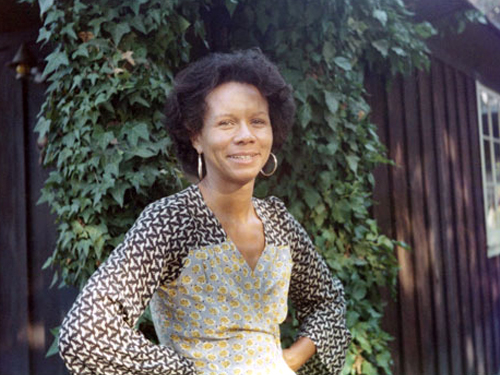
Born in 1942, raised in Jersey City, and educated at Skidmore and the Sorbonne, Kathleen Collins was an activist with SNCC during the Civil Rights Movement who went on to carve out a career for herself as a playwright and filmmaker, during a time when black women were rarely seen in those roles.

A COLLECTION OF 6 texts, 5 film pages, 1 event,
FR EN

“What we see on the screen, or in any picture representing the solidity of Palestinians in the interior, is only that, a utopian image making possible a connection between Palestinian individuals and Palestinian land.” – Edward Said

By showing the lived complexity of life under occupation, in all its contradictions and its singularities, Michel Khleifi’s film marked an important shift in the history of Palestinian cinema, one that he would explore further in his subsequent work. 

To Be a Documentary Filmmaker

A COLLECTION OF 5 texts, 5 film pages, 1 event, 1 news item,
FR EN IT

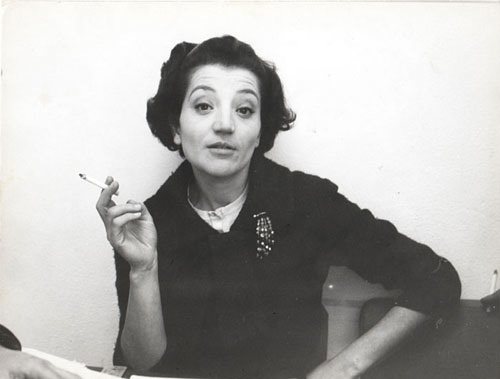
Cecilia Mangini (1927-2021) was the first Italian woman with the audacity to step behind the camera to document the socio-political transformations of post–World War II. A photographer, essayist, and filmmaker, she dedicated her whole life to militant cinema, an adjective – she used to say – “that today sounds like a profanity”.