

On the Bowery
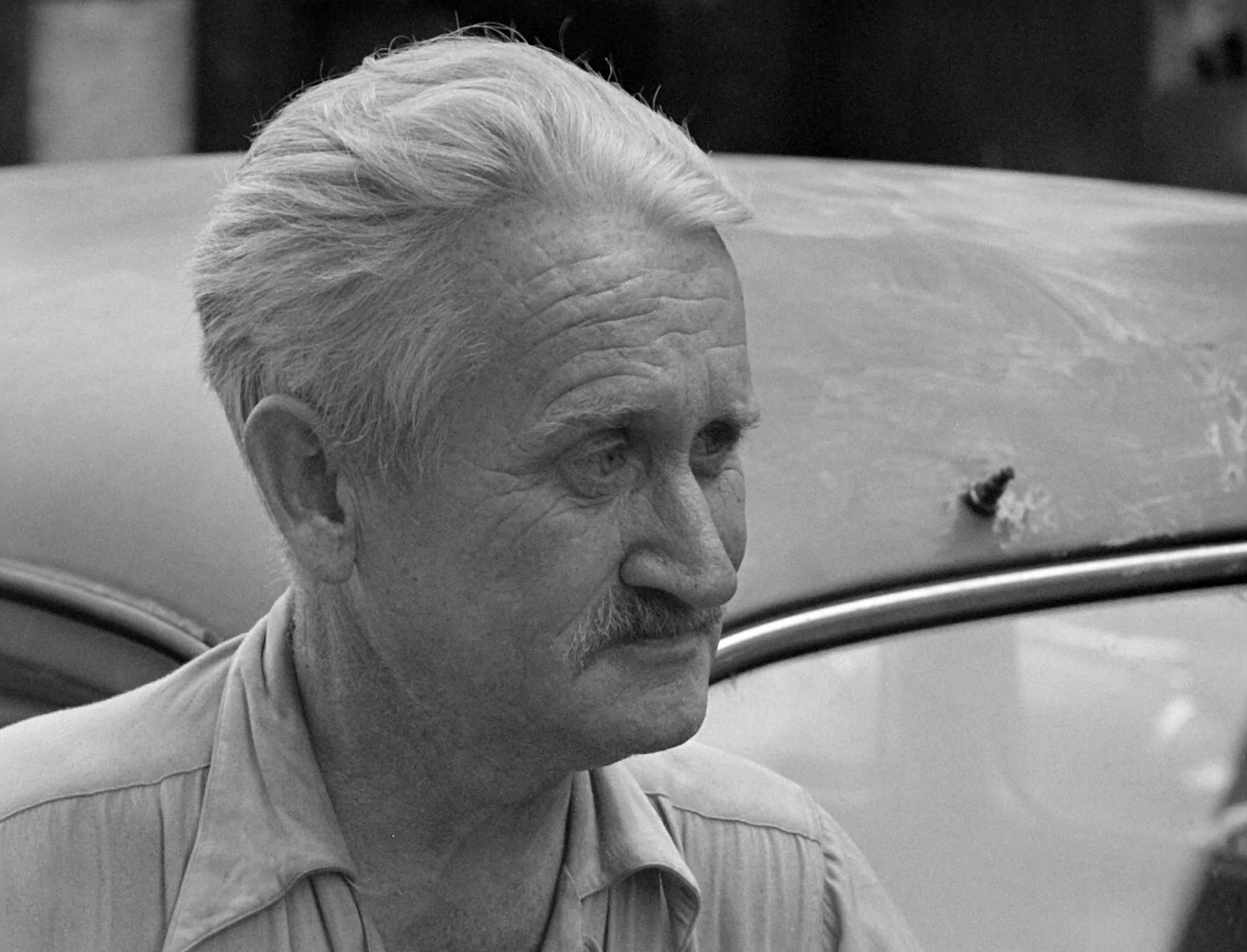
“I do not belong to you personally, but to suffering humanity in your person”. Thus Raskolnikov to Sonia. Rogosin to the people of the lower depths to whom his deeply compassionate film is in its entirety dedicated. On the Bowery is neither a propaganda film nor a piece of reportage. Made from the inside, in the way Flaherty made Nanook and Moana. Rogosin and his associates (who include Mark Sufrin, and Richard Bagley, who photographed The Quiet One) have identified themselves as filmmakers with the appalling collection of human catastrophes they have chosen to depict. Rogosin himself spent several years in attaining this identification. Nearly all the scenes and sequences of the film have a quality of conviction which can only come from this observation from the inside. Many of the scenes must have been staged. But “staging” is hardly the right description, because Rogosin has managed to include his camera among the dead-beat down-and-out alcoholics of Skid Row. In the bars and on the sidewalks, the camera leans sympathetically across table or grating towards these men and women who have passed the point of no return, and have reached a hideous sort of happiness achieved at best by gin and whisky and at worst (when purchasing power has gone) by a shared squeeze from a can of metal-polish. We are with these people, and we hear what they say: the dialogue, if that is the right word, is quite wonderful. And Rogosin insists that we must love them; he seems to say, with Dostoievsky, that “the sense of their own degradation is as essential to those reckless unbridled natures as the sense of their own generosity”.
On the Bowery is only moderately well edited, and there are moments when the music (admirable in itself) seems an intrusion. But the visuals, no less than the searing casualness of the dialogue, are in themselves so strong that the whole work hangs together with a sort of desperate sincerity that is stronger and more effective than all the technical spit-and-polish in the world. The briefing given by the janitor of the Bowery Mission to the evening’s clientele is shot dead straight to camera. It breaks the rules, as did Ruby Grierson and John Taylor when they shot Housing Problems in the East End. Again, the woman in the bar who is “never going back, never going back” – where to she does not and need not specify – has reached a point at which the existence of a film camera a few yards away could not be of even academic interest to her. One may note too, over and over again, activities going on, often slightly out of focus, in the background of a shot – activities which have the significance that comes not so much from eavesdropping as from the terror of a reality seen by mistake from the corner of the eye.
I am now aware that this is not turning out to be a nice clean efficient film review. Perhaps this is because On the Bowery is not, thank goodness, a nice clean efficient film. Indeed, phrases like “not for the squeamish” have appeared in several criticisms I have read. Such phrases are irrelevant and misleading, unless you apply the same ruling to Dostoievsky’s work – no apologies by the way for the constant references. The fact is that compassion is a rare element in films. We have seen it sometimes – in Donskoi, in the earlier parts of Pudovkin’s Deserter, in parts of The Grapes of Wrath, perhaps in Dovzhenko and certainly in Jennings’ Fires Were Started. And now Rogosin – in the first film he has ever made. He deserves our salutations.
Ray, one of the two principal characters in On the Bowery, is in fact a young man of essential intelligence. When we see him in these lower depths we know, with him, that he still has the capacity to emerge from them, not temporarily but forever. Why then does Rogosin, in his frightening final sequence – in which Ray becomes almost a part of a portrait gallery of lost souls – refuse to indicate a happy ending? The answer is, surely, that he cannot in honesty try to act the prophet one way or the other. He leaves Ray as he has found him – loaded, anything goes. “It is not God Prognosis” (said Ivan Karamazov) “only I must respectfully return him my entrance ticket.” Very few films reach this area of thought and feeling. On the Bowery most certainly does.
PS. Nobody here, during the Golden Age of British documentary, ever stuck their noses or cameras into the Gorbals.
Image from On the Bowery (Lionel Rogosin, 1956)
Originally published in Sight and Sound Magazine 26, No. 2 (Autumn 1956).
With thanks to Sight & Sound Magazine.

