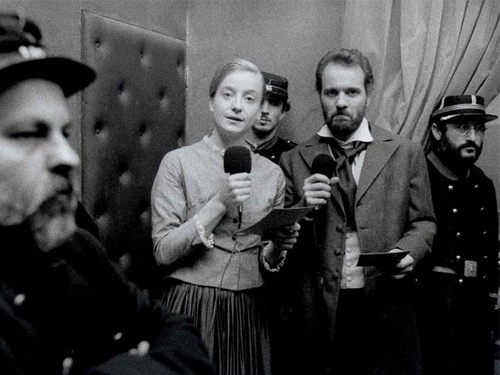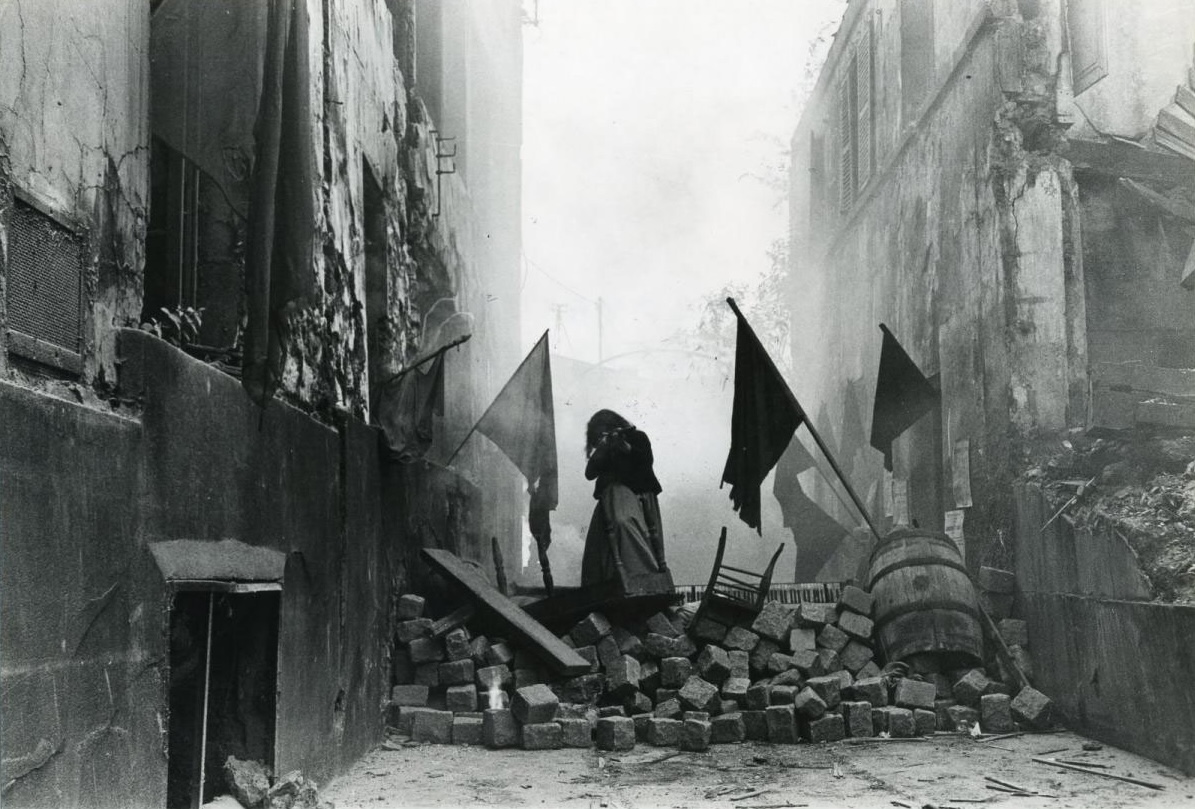
The English filmmaker Peter Watkins (1935–2025) radically challenged the form of film as a mass medium. With the concept of the “Monoform”, he describes how mainstream media deprive viewers of the possibility of active engagement by imposing hierarchical and standardised forms on filmmakers and television producers. In his early films, historical events or alternative realities are presented through fictional reporters. The War Game (1965), for instance, takes the form of a hypothetical news report depicting the outbreak of a nuclear war and its consequences for the British population. Watkins turns the conventions of reportage against themselves, undermining the authority traditionally attributed to the documentary format.
From the 1970s onwards, Watkins increasingly distances himself from the Monoform, seeking to revolutionise not only the form of film but also its production process. The collective act of filmmaking itself becomes a political gesture. In La commune (Paris, 1871) (2000), more than two hundred participants re-enact the Paris Commune in an abandoned factory, filmed by two camera crews, each with its own political perspective. In preparation for the shoot, the participants read historical texts and engage in political discussions. The film thus becomes both a form of historiography and a collective contemporary process. The result is a film lasting almost six hours, as well as a collective that continues to carry this participatory experience forward. ‘Le Rebond pour la Commune’ continues to meet for years afterwards to discuss social and political issues and organises screenings of La commune around the world.
Film Pages