

An International Symposium
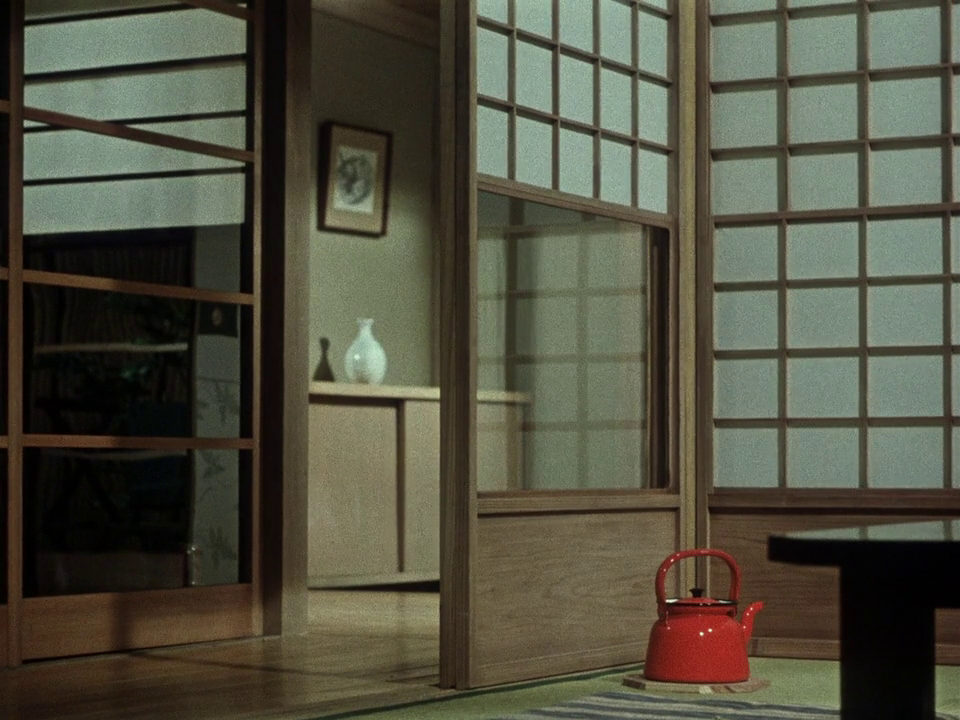
This conference explores the enduring relevance of Yasujirō Ozu (1903-1963) by examining his work through diverse contemporary critical, historical, and aesthetic perspectives. The presentations revisit Ozu’s authorship, cinematic language, and cultural significance, situating his films within broader debates on modernity, war, gender, family, and Japanese society. Contributions address the formal qualities of Ozu’s cinema, including his editing, camera style, and use of space, alongside new archival research on his creative practice. Other papers investigate the historical and political dimensions of films such as Tokyo Twilight, focusing on reproduction, sexuality, and postwar discourse, while also considering Ozu’s influence on later filmmakers, particularly Hirokazu Kore-eda. Together, these studies demonstrate how Ozu’s cinema continues to inspire new interpretations and interdisciplinary research, reaffirming its central place in both Japanese film history and contemporary global film scholarship.
Organized by
Kansai University and KU Leuven (Belgium), Disegni, Research Foundation Flanders (FWO), Sabzian
1:00 PM – 1:15 PM / Introduction by Organizers
1:15 PM – 2:15 PM / Woojeong Joo (Nagoya University)
Which Ozu? Auteur, Shōshimin, Imperial Soldier, and Discourse
In this presentation, I examine and assess some current trends in Ozu studies through a critical engagement with my own research conducted over the past decade. The examples discussed reflect an effort to resituate Ozu within contemporary Japanese society and Japanese film studies, with particular attention to questions of authorship, genre, war experience, and discourse. By tracing these perspectives, I suggest increasingly diverse ways of understanding Ozu as a signifier of evolving meanings today, extending beyond the conventional boundaries of classical Japanese cinema.
2:15 PM – 2:30 PM / Coffee Break
2:30 PM – 3:00 PM / Matsuura Kanji (Ozu Yasujiro Institute) and Akiko Miyamoto (Doshisha Women’s College of Liberal Arts, online)
Research on Ozu Yasujiro: Architecture and the Diary of Noda Kogo
We will present two aspects of our ongoing research on Ozu: an analysis of set design and an investigation of Noda Kogo’s diary. We will also introduce the Ozu Yasujiro Institute building, which is currently under construction.
3:00 PM – 4:00 PM / Gerard-Jan Claes (Sabzian, filmmaker) and Stéphane Symons (KU Leuven, Belgium / Visiting Researcher at Kansai University)
Ozu’s Pleonasms
The images of Ozu do not point to a lack but rather to an abundance, causing them to lose their meaning as a mere referent. Images that are filled to the brim with singular rhythms, internal movements and dynamics – this is where we locate the essence of Ozu’s cinema. We argue that Ozu’s films build on formal conceptions and cinematographic patterns that are rigorously held on to as a creative principle to depict stories, characters, scenes, encounters, atmospheres and gestures. To analyze Ozu’s formal conceptions and cinematographic patterns, the book discusses, amongst other elements, his editing strategies, camera position and movements, use of music, design of interior spaces and scripts.
4:00 PM – 4:15 PM / Coffee Break
4:15 PM – 5:00 PM / Chika Kinoshita (Kyoto University)
Dialogue in Shadows: Abortion, Sexuality, and War in Ozu Yasujirō’s Tokyo Twilight (1957)
This presentation begins by taking Hou Hsiao-hsien’s Café Lumière (2003) as an uncredited remake of Tokyo Twilight that, in retrospect, contributed to the emergence of a new discourse on Ozu. Both films center on an unmarried pregnant woman’s wandering through Tokyo's cityscape in search of her own identity, which is closely interwoven with Japan’s colonial history. A brief comparison with Café Lumière highlights the historical specificity of Tokyo Twilight’s politics of reproduction and family. I contextualize the film within the rise of abortion-themed fiction films that followed the de facto legalization of abortion in Japan through the 1948 Eugenic Protection Law and its revisions (1949, 1952), relating them to contemporary media discourse. Then, I discuss Tokyo Twilight as cinematic dialogue on women’s bodies and reproduction between Ozu, Naruse Mikio, screenwriters Noda Kōgo and Mizuki Yōko, and Mozoguchi Kenji.
5:00 PM – 5:45 PM / Hironori Itoh (Kumamoto University)
Yasujiro Ozu Now: Empty Shot, the Eighth Art, Hirokazu Kore-eda
More than two decades after a critic famously noted that “Yasujirō Ozu has never ceased to be a filmmaker of the future,” this assertion retains its validity. This presentation investigates Ozu’s signature “empty shot” to elucidate his vision of cinema as a comprehensive art form. Furthermore, it addresses how his cinematic lineage has been negotiated and inherited by contemporary filmmakers, particularly Hirokazu Kore-eda.
5:45 PM – 6:00 PM / Concluding Remarks
Address
Kansai University Tokyo Center,
Sapia Tower 9F, Room A,
1-7-12 Marunouchi, Chiyoda-ku,
Tokyo 100-0005
Poster
