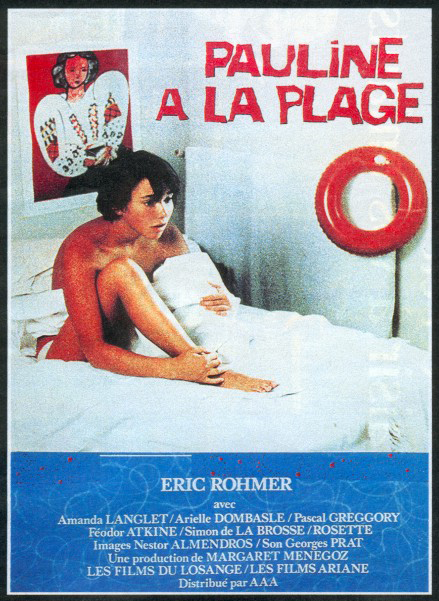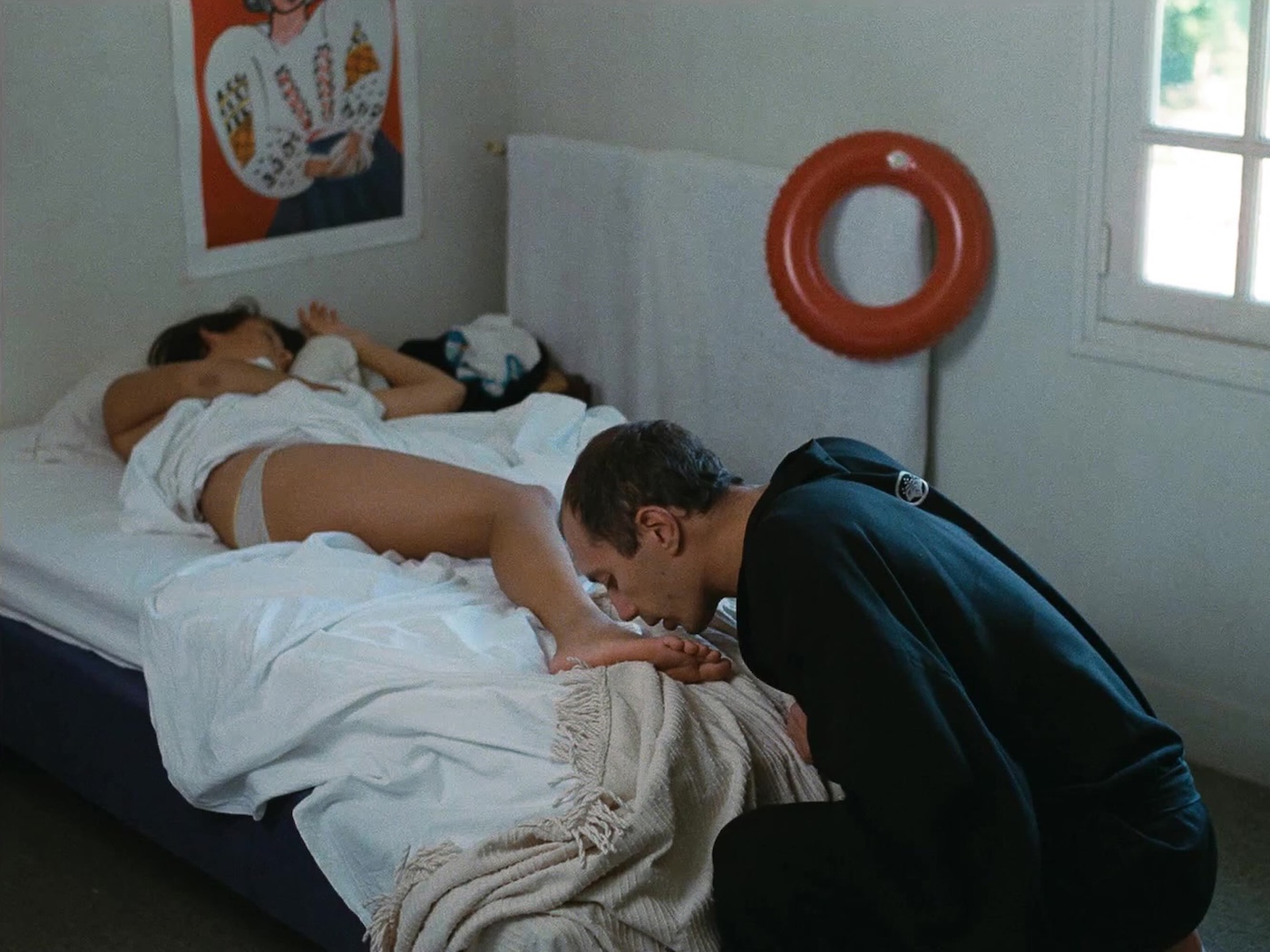
The third entry in Éric Rohmer’s 1980s Comedies and Proverbs series unfolds under a proverb borrowed from Chrétien de Troyes: “A wagging tongue bites itself.” Setting the tone for a film driven by conversation, gossip, and misunderstanding, Rohmer explores how rumours, hearsay, and conflicting accounts shape relationships. As stories circulate and perspectives collide, what is said – and misheard – becomes the engine of a subtle comedy of desire and deception.
EN
Serge Daney: Have you ever written a character for a specific actor?
Éric Rohmer: Not really, no. I’m very lucky – I won’t say it’s a miracle, that’s too strong a word – but I am extremely lucky with my actors. The text that I’ve written suits them well. In [Pauline à la plage], it’s particularly clear: the actors have been almost impregnated by the text. They have made it theirs. In fact, I don’t really work with them and I have very little to do with that process. When people talk about my “relationships with my actors,” I feel slightly embarrassed because it happens naturally. And I think it’s very important in the cinema to trust the natural movement of things, without trying to interfere too much. The default position in most films is that you interfere, that you want to put too much in front of the camera, to direct too much, and say too much. So, yes, on that point, I’m very ‘New Wave,’ like others, Godard for example, but in a less systematic way than him. And then there’s something else: most of my actors have also been directors, either in the theatre or in the cinema – Atkine, Dombasle, Rosette in Pauline. I like appealing to their intelligence.
Éric Rohmer in conversation with Serge Daney and Louella Interim1
- 1
Serge Daney and Louella Interim, “Interview: Pauline at the Beach,” Libération, 23 March 1983. English translation from Fiona Handyside, ed., Eric Rohmer: Interviews (Jackson: University Press of Mississippi, 2013).