When the new head of a mental institution is revealed to be an imposter, he confesses that he may also be responsible for murder. Convinced of his innocence, a psychoanalyst helps to uncover the cause of his amnesia.
EN
“In the book they’ve written about you, Eric Rohmer and Claude Chabrol claim you intended Spellbound to be a wilder, more extravagant picture. The clinic director, for instance, was to have the Cross of Christ tattooed on his soles so that he trampled it with each step. He also engaged in various forms of black magic.
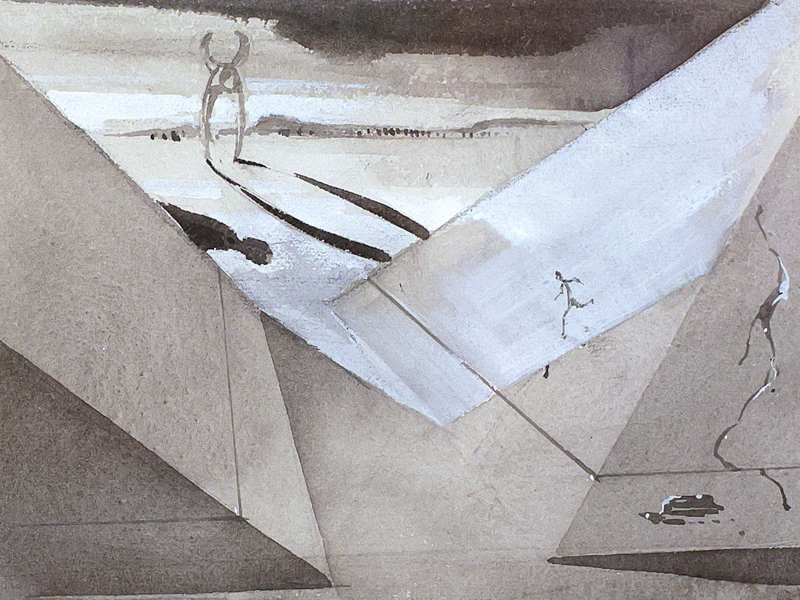
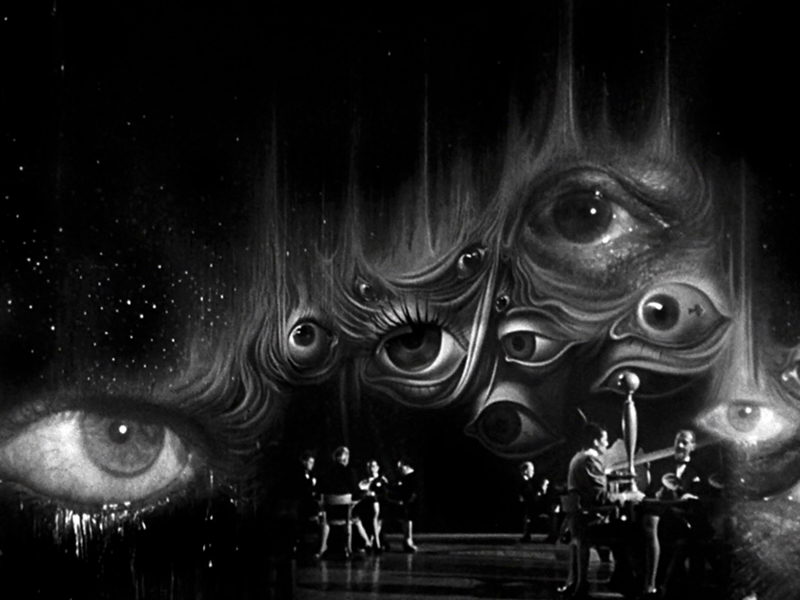
Well, the original novel, ‘The House of Dr. Edwardes,’ was about a madman taking over an insane asylum. It was melodramatic and quite weird. In the book even the orderlies were lunatics and they did some very queer things. But I wanted to do something more sensible, to turn out the first picture on psychoanalysis. So I worked with Ben Hecht, who was in constant touch with prominent psychoanalysts. I was determined to break with the traditional way of handling dream sequences through a blurred and hazy screen. I asked Selznick if he could get Dali to work with us and he agreed, though I think he didn’t really understand my reasons for wanting Dali. He probably thought I wanted his collaboration for publicity purposes. The real reason was that I wanted to convey the dreams with great visual sharpness and clarity, sharper than the film itself. I wanted Dali because of the architectural sharpness of his work. Chirico has the same quality, you know, the long shadows, the infinity of distance, and the converging lines of perspective. But Dali had some strange ideas; he wanted a statue to crack like a shell falling apart, with ants crawling all over it, and underneath, there would be Ingrid Bergman, covered by the ants! It just wasn’t possible. My idea was to shoot the Dali dream scenes in the open air so that the whole thing, photographed in real sunshine, would be terribly sharp. I was very keen on that idea, but the producers were concerned about the expense. So we shot the dream in the studios.
Finally, there was a single dream divided into four separate parts. I saw Spellbound again recently and I must admit that I didn’t care very much for the scenario.
Well, it’s just another manhunt story wrapped up in pseudo-psychoanalysis.
The peculiar thing is that several of your pictures-among them Notorious and Vertigo-really look like filmed dreams, and that’s why one expects a Hitchcock film on psychoanalysis to be wildly imaginative-way out! Instead, this turns out to be one of your most sensible pictures, with lots of dialogue. My criticism is that Spellbound is rather weak on fantasy, especially in the light of some of your other works.
Since psychoanalysis was involved, there was a reluctance to fantasize; we tried to use a logical approach to the man’s adventure.”
François Truffaut in conversation with Alfred Hitchcock1
- 1
François Truffaut, Hitchcock, Simon & Schuster, 1985.