Week 6/2026
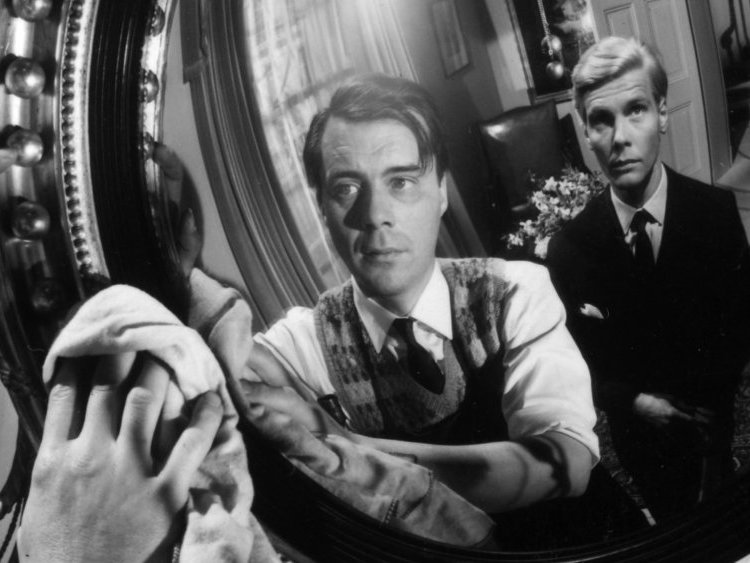
Joseph Losey’s The Servant is an indictment of the English class system. Losey, who was blacklisted by Hollywood for his communist sympathies, explores the reversal of power in the relationship between a butler and his wealthy employer. Through manipulation and deceit, the butler gradually gains control over his employer, who eventually becomes a prisoner in his own house. The theme of class struggle is reflected in a mise-en-scène that spatially opposes high and low spaces, with the staircase symbolically connecting the two.
A classic of neorealism, Vittorio De Sica’s Sciuscià looks at post-war Italian society through the eyes of Pasquale and Guiseppe, two young shoeshine boys whose friendship and childhood innocence are put to the test as their environment pushes them into criminality. The first film to win an Oscar for best foreign language film, Sciuscià was praised for its truthful depiction of everyday life. Orson Welles is often quoted saying that, as he watched the film, “the camera disappeared, the screen disappeared; it was just life . . .”
Alphaville, une étrange aventure de Lemmy Caution is Godard’s critique of a technocratic world where technology represses individual expression. Somewhere in the future, secret agent Lemmy Caution is sent to the totalitarian city of Alphaville ruled by ALPHA 60, a supercomputer imposing its algorithmic logic and forbidding all forms of emotion, love and art. Combining elements from film noir, German expressionism and cinema vérité, Godard’s juxtaposition of genres and styles creates a dystopian image of a world where “weird has become normal”. In a time when algorithms are increasingly turning us into “slaves of probability”, as Lemmy Caution puts it, Alphaville reminds us of the importance of unpredictability.