Making On the Bowery

UPDATED ON 16.09.2026
A COLLECTION OF 5 texts, 8 film pages, 1 event,
EN

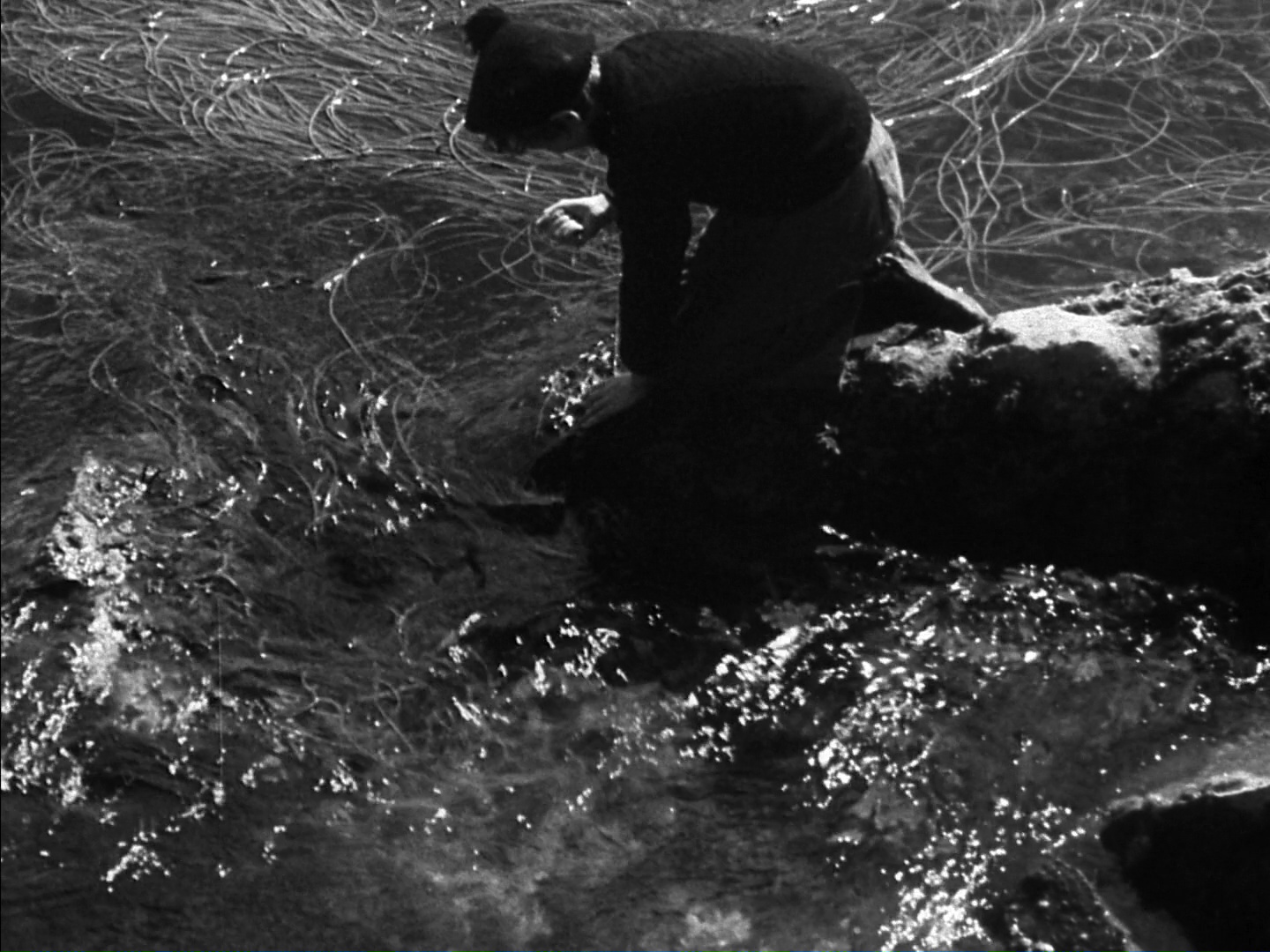
70 years ago, in 1956, Lionel Rogosin made On the Bowery, a landmark of American cinema and a key work in the revival of American independent filmmaking. Rogosin conceived On the Bowery as an attempt to bring together two traditions that had profoundly inspired him: Robert Flaherty’s poetic realism and the Italian neorealism of Vittorio De Sica and Roberto Rossellini. His first encounter with Robert Flaherty’s Man of Aran (1934) as a child left him, in his words, with a feeling “similar to the reaction a Siberian nomad would have had upon his first view of the ocean; awe and disbelief.” As he later wrote, his aim was “to find a way between the poetic realism of Flaherty and the narrative form of De Sica to a semi-fictional style solidly grounded in authentic realism.”

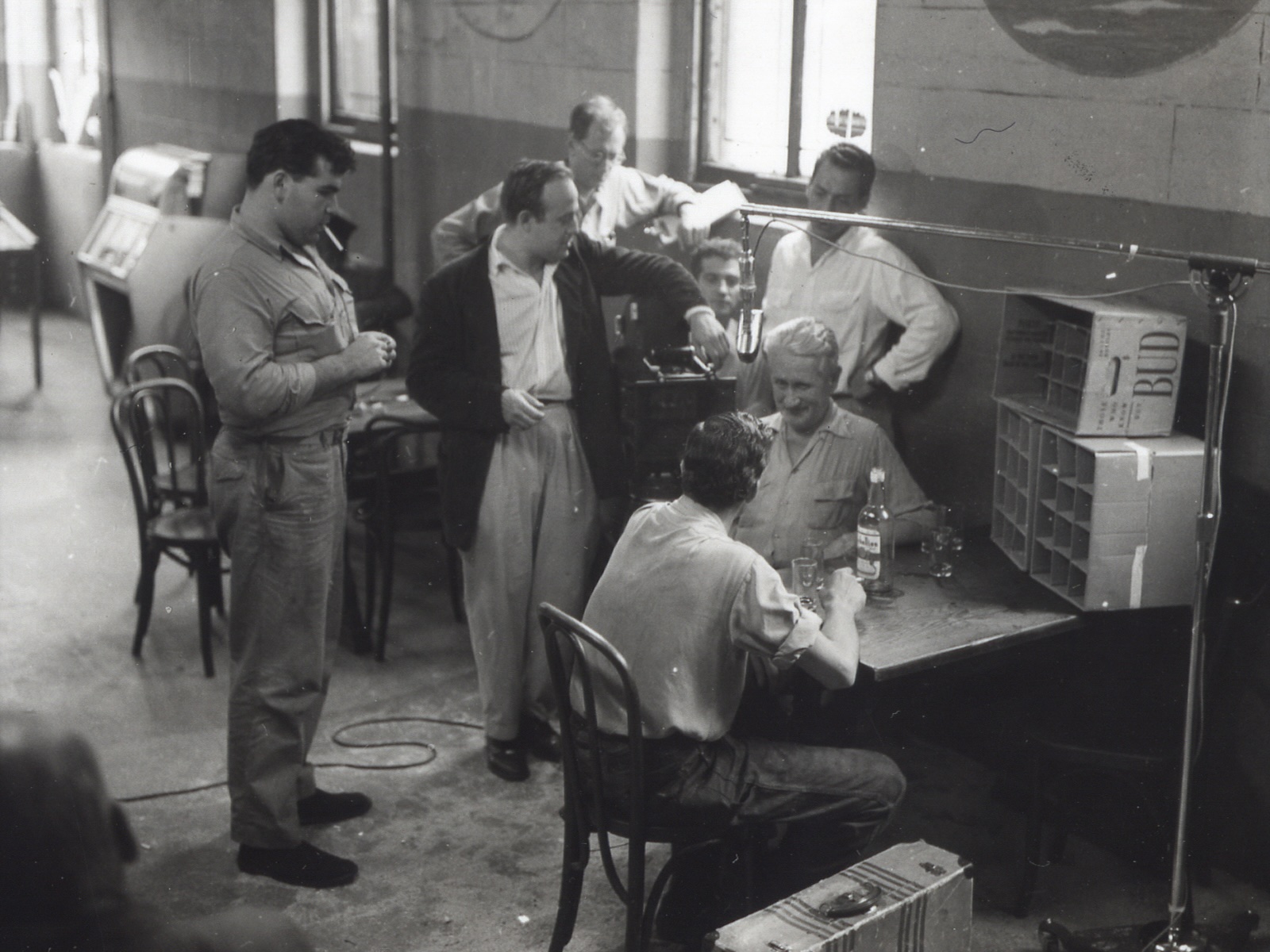
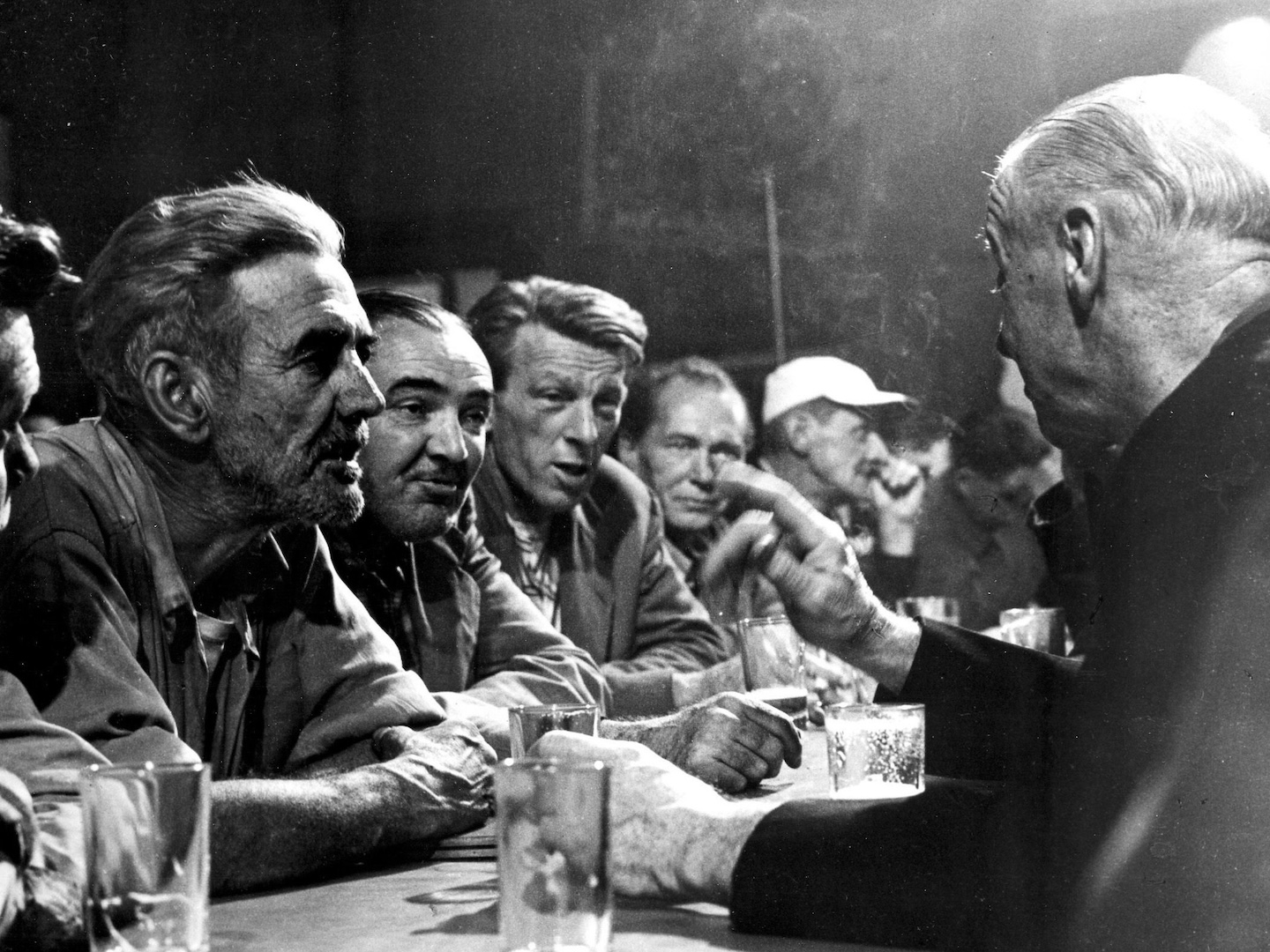
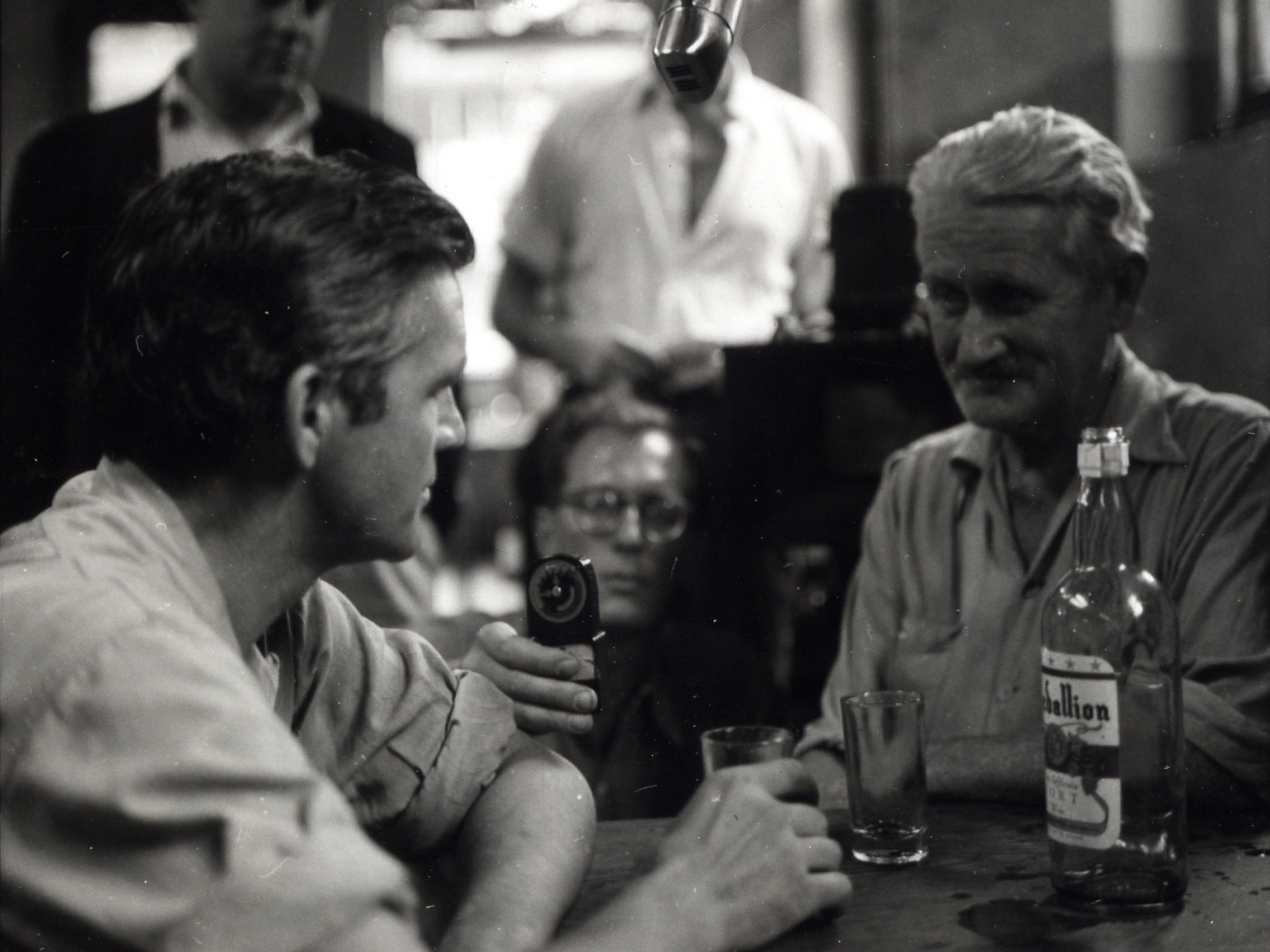
To develop this method, Rogosin spent months immersed in the Bowery, a notorious neighbourhood beneath New York’s famous elevated railway, which was being demolished around the time the film was made, observing its streets, bars, flophouses and missions, without initially knowing what form the film would take. “I began, using Flaherty as a guide by exploring the Bowery and all of its aspects.” His encounters gradually led him to Gorman Hendricks, who became his guide, and to the small, unorthodox crew he assembled through his Greenwich Village connections, including writer Mark Sufrin and cameraman Dick Bagley. When Bagley asked Rogosin what he had in mind, Rogosin pointed to the Rembrandt portraits covering his walls and simply said, “THAT”. The bristled faces in On the Bowery tell the real story. They’re portraits from what a priest in the film calls “the saddest and maddest street in the world.” Together with Sufrin and Bagley, Rogosin developed the film’s basic storyline, while leaving the dialogue to emerge from the lives and memories of its non-professional cast.

The texts gathered here return to this formative period in Rogosin’s career: to his influences, his encounters on the Bowery, his collaborators and his search for a cinematic language. The collection coincides with the retrospective of Rogosin’s films at CINEMATEK, presented in collaboration with Sabzian.

Many thanks to Michael Ariel Rogosin.

Texts
Lionel Rogosin, 1998
ARTICLE
EN

For months I just observed the life on the Bowery, at all hours of the night and day and I developed some absurd schemes. At one point I decided I had to photograph men in the bars secretly. I had a box made for my Bolex camera with a hole in it for the lens. Naturally the results were pathetic and I gave that method up. It was then that I abandoned all pretense of secrecy and decided to come out in the open. Eventually I found out that if I told the people what I wanted to do they were very cooperative and ever since that has always been my method if possible.

Lionel Rogosin, 1972
ARTICLE
EN

The artist is driven by his material, his subject matter is what gives him the form. “It is a love-affair with truth,” in which the subject eventually becomes master. If the film-maker has a preconceived form, he will treat all subjects with the same form, he will be inflexible and over-stylised, without versatility. The form must grow like a living thing out of the material. If this is itself a principle, it is an infinitely variable one – a mystery.

Lionel Rogosin, 1974
ARTICLE
EN

The situation is very similar to growing wheat on the prairies before you have a rail road. This wasn’t and couldn’t be done because there would have been no way to get the wheat to the market and to the people who would eat it. The same is true of film production and distribution. There is no way of making films if there is no way of getting people to see them.

Lionel Rogosin, 1998
ARTICLE
EN

When I was approximately eleven years old and performing the Saturday afternoon ritual of attending the local movie theatre, Flaherty’s Man of Aran unrolled upon the screen and I was suddenly aware of an extraordinary sensation. It was similar to the reaction a Siberian nomad would have had upon his first view of the ocean; awe and disbelief.

Interview with Lionel Rogosin

Eric Breitbart, 1987
CONVERSATION
EN

Do you see nature and cinema as opposites?

No, I see them as very close. For me, cinema is a way of seeing nature. It’s like being a painter. It’s just that I don’t see landscapes – I see people. I’d love to make a film about the sea, though. That’s one of my dreams, but I’ve never come close to it. It’s such an incredible subject for cinema.

Film Pages

Event