Trevor Perri

Sirât by Oliver Laxe

Tillo Huygelen, 2025
ARTICLE
10.12.2025
NL EN

If Laxe’s true subject is detachment and indifference, and his film is a form of punishment, then that results in a peculiar cruelty. In various interviews, Laxe says that Sirât arose from a “wound,” which he traces back to Gestalt psychology. “Art is pushing boundaries, spirituality is pushing boundaries, and that’s where you get to know yourself,” he says. The word “wound” also encapsulates the duality of the film: wounds can be healed and inflicted. Strangely enough, Sirât does both.

Tillo Huygelen, 2025
ARTICLE
19.11.2025
NL FR EN

Criticism was both a public and daily activity for Bazin. In the postwar years, he was involved in just about every magazine that had anything to do with early film culture. This was a process that would culminate in his founding, along with Jacques Doniol-Valcroze and Joseph-Marie Lo Duca, of Cahiers du Cinéma in 1951. It was also around this time that his fragile health first became critical. It is for this reason, among others, that Bazin, stuck in his bed, turned to television. He came to see the tube as an important part of the visual world, and he wanted to describe it.

Jeunes mères (Jean-Pierre & Luc Dardenne, 2025)

PRISMA
22.10.2025
NL EN

While the Dardenne brothers typically assume a transparent attitude with the camera functioning as an instrument connecting viewer and character, the opening scene of Jeunes mères seems to be toying with viewers and their expectations. The frame guides and misleads viewers with the aim of creating a surprise effect. What’s behind this apparently manipulative opening shot?

On Bradley Cooper’s Maestro (2023)

Gerard-Jan Claes, 2025
ARTICLE
19.03.2025
NL EN

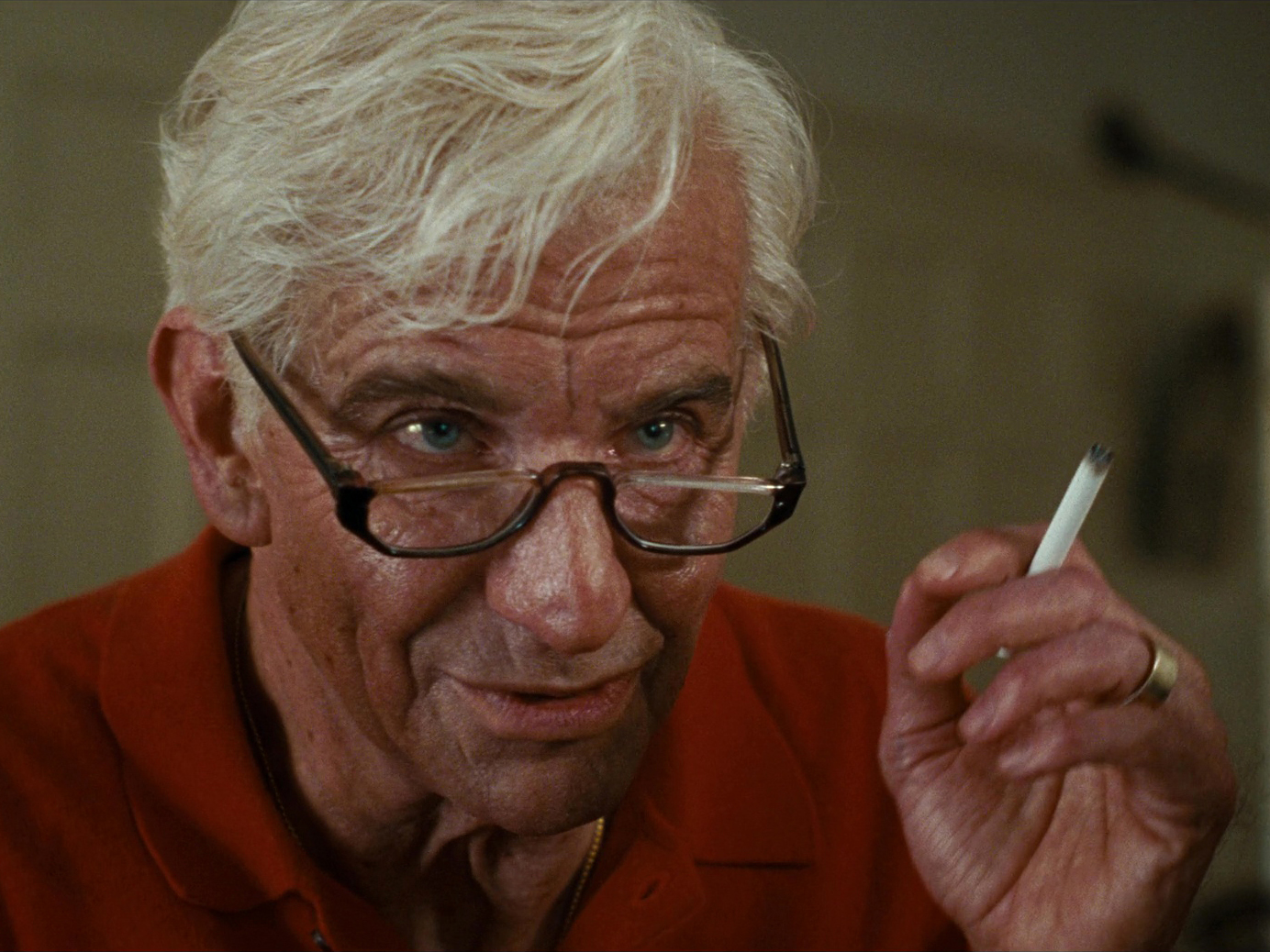
Jean Baudrillard described obscenity as an excess of visibility, an excess of transparency in which nothing more is suggested or concealed, where there’s no room for seduction as a game of distance and mystery. Maestro succumbs to exhibitionism in this sense: Cooper forces all his effort and skill on the viewer unasked. The illusion – Cooper plays Bernstein – remains incomplete. The film is a constant reminder of the performance itself, of the blood, sweat and tears that made Maestro possible. The acting process is emphatically exposed, as if revealing something that should have remained hidden, something that doesn’t need to be seen.

On Johan van der Keuken

Gerard-Jan Claes, 2024
ARTICLE
07.05.2025
EN NL

Van der Keuken makes a world exist, he creates a reality. Describing then is not representing something that already exists but rather realising “a” reality. By creating forms, he creates a world of things that comes to life in our imagination. Herman does exist, as form. The good fortune Van der Keuken makes us part of is just that magical realisation of the world on the screen, where the inner suddenly becomes outer.

Charles Dekeukeleire, 1932
MANIFESTO
21.02.2024
NL FR EN

During that first period, he wanted to be the physicist of the photogénie, during the second he became its chemist. For these experiments, the director was free to ignore the general public. Film also became more and more inaccessible to the crowd, understandable and enjoyable only to a small circle of insiders. However, once those trials had given him a thorough knowledge of technique, the director naturally returned to nature, to man. He returned to the street. It wasn’t the street of the studio that fascinated him, the street of cardboard, but the real street where life teems in a thousand forms, where it can be caught and filmed directly.