

Jean Vigo
A Reality in Motion

It is rare for an oeuvre of such limited size – two short films, one medium-length film, and one feature, together totalling less than 170 minutes – to have such a great impact and reach within film history. It testifies to the originality, boldness, and artistic freedom with which Jean Vigo (1905–1934) shaped his brief passage through cinema.
As the child of two militant anarchists, Emily Cléro and Miguel Almereyda (an anagram of “y’a la merde”), Vigo’s short life and his cinema alike were marked by social struggle and the fierce repression of the French state. His father, a major influence within syndicalist and anarchist circles, helped found the anti-militarist weekly La Guerre sociale and, above all, Le Bonnet rouge, a satirical-anarchist newspaper. At the age of nine, the young Vigo and his father even witnessed the assassination of Jean Jaurès in Paris. His father’s political activities brought him into such serious trouble that he was arrested in 1917 on suspicion of espionage. Less than two weeks later, he was found dead in his cell under mysterious circumstances. Officially, he was said to have hanged himself with his shoelaces.
At the age of twelve, Vigo leaves Paris and goes to school in Nîmes under the pseudonym Jean Sales. Only in 1922, when he returns to the French capital and develops an interest in cinema, does he take up the name Vigo again. In 1926, he falls seriously ill: he contracts tuberculosis, a disease he would never recover from, and which also forces him to move to Nice.
Unlike many other filmmakers, Vigo did not end up in the film world by chance or network. As François Truffaut later described him, he is “one of the first professional filmmakers by vocation. He is a spectator who becomes a cinephile; he watches films, more and more films, starts a film club to bring better films to Nice, and soon he wants to make films himself. He writes here and there, applies for a position as an assistant (“I am willing to pick up the stars’ manure”), buys a camera, and produces his first short film, À propos de Nice.”
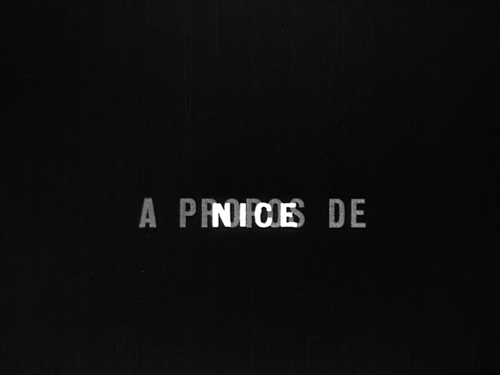
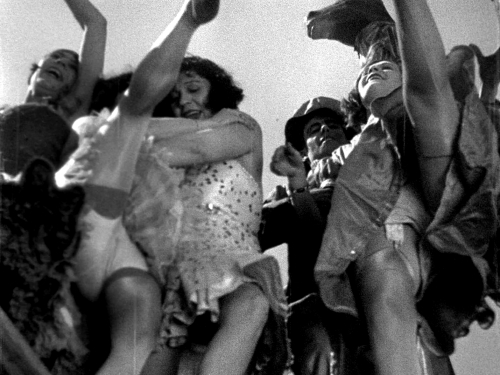
In 1930, he would indeed make his first short film in Nice, working with cinematographer Boris Kaufman, the younger brother of Dziga Vertov and Mikhail Kaufman. Already in this first creation, in which he portrays the fashionable life of the French seaside town with an ironic and critical eye, Vigo’s unique blend of lyricism and social awareness becomes clear, a cinema driven by a strong desire for experimentation and invention. In his text ‘Toward a Social Cinema’, Vigo outlined his approach as follows: “In this film, by means of a city whose events are significant, we witness a certain world on trial. […] [T]hese are the last convulsions of a society so little conscious of itself that it is enough to make you so nauseated that you will become an accomplice to a revolutionary solution.”
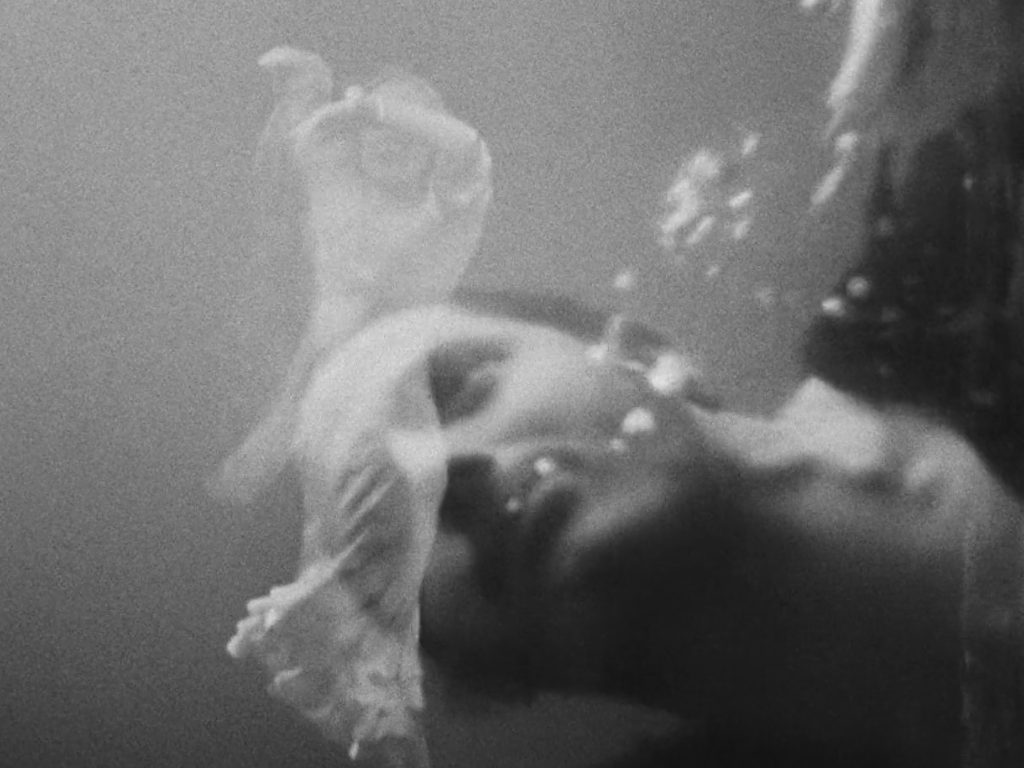
A year later came Taris, roi de l’eau (1931), a short documentary about swimming champion Jean Taris, in which movement and the body take centre stage, and the use of playful, poetic film techniques such as slow motion and underwater shots stands out.
Through his friend and actor René Lefèvre, Vigo met Jacques-Louis Nounez in 1932, a wealthy businessman interested in making films. Nounez was impressed by Vigo: “A man with a deep idealism, with an extreme sensitivity. On top of that, he was a man of great finesse, and one had a truly remarkable impression. Very rare.” He agreed to finance a film by Vigo based on his childhood memories at a boarding school: Zéro de conduite. The medium-length film about a group of schoolboys who revolt against the oppressive discipline of their boarding school, is, with its poetic imagery and anti-authoritarian spirit, an ode to youthful freedom and imagination. Reactions to the film, from both audiences and the press, were nevertheless fierce: “It’s just bidet water” or “It borders on scatology,” and so on. Vigo’s memories and experiences, through which he sought to capture his own reality, clashed once again with the rules and expectations of authoritarian structures. The film was almost immediately banned by the French censorship board.
Nevertheless, Nounez continued to support Vigo and offered him the script for L’Atalante. Vigo initially hesitated to film this story about a young couple traveling together on a cargo boat, L’Atalante, through the French countryside. But he adapted the “meagre little story” to his own vision and succeeded in masterfully blending dreamlike lyricism with unfiltered realism in the film, starring Jean Dasté, Dita Parlo, and Michel Simon. “He no longer places in front of his lens anything but reality, which he transforms into enchantment,” Truffaut praised the film many years later.
It is this love for whatever appears before his lens, both people and forms, that makes Vigo’s cinema so unique. “Vigo had such esteem, if you will,” [Dita] Parlo said years later in Jacques Rozier’s documentary about Vigo, “a devotion to every human being, to every person, that he tried not to touch them.” It results in a cinema where reality and fiction continually merge in a dynamic of osmosis, where reality is always in motion.
Even while shooting his last two films, Vigo’s health continued to decline. He would not be able to fully complete L’Atalante, leaving the film initially mutilated by the distributor. He ultimately died at the age of 29.
Several texts by Jean Vigo have also been preserved, mostly speeches given before screenings of his films. Driven by a sharp irony and biting humour, they reveal an unmistakable belief in the possibilities of cinema, while also warning against the commercial dynamics of the film industry and political censorship. “We have claimed for too long that cinema is young, so as not to have become old men ourselves,” he wrote.
Vigo’s cinema would have a major influence on the later Nouvelle Vague and a diverse group of filmmakers throughout film history, for which his artistic freedom was particularly inspirational. Filmmaker and close friend Jean Painlevé described Vigo as follows: “Freedom, it costs very, very much. It is very rare. There are about ten men in the world who are free. Jean Vigo was a free man. And consequently, he was truly an example.”
Gerard-Jan Claes
Texts


Film Pages


