

Texts


Every Wednesday, Sabzian publishes texts on cinema in Dutch, English or French.Chaque mercredi, Sabzian publie des textes sur le cinéma en néerlandais, en anglais ou en français.Elke woensdag publiceert Sabzian teksten over cinema in het Nederlands, Engels of Frans.
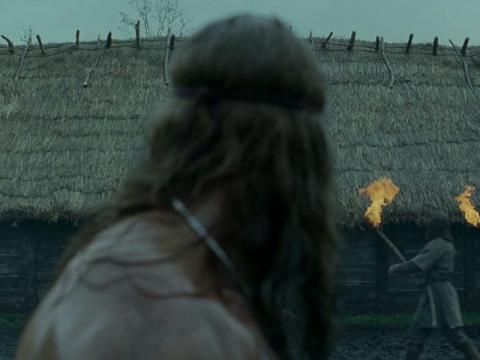
In the first half of The Northman (2022) – Robert Eggers’s rendering of the original Hamlet saga – viewers are witness to a massacre. The year is 900 AD. A band of Vikings has breached a walled enclosure in the Russian river delta; clad in their wolf skins, they embark on a grisly rampage wielding torches, arrows, and axes.
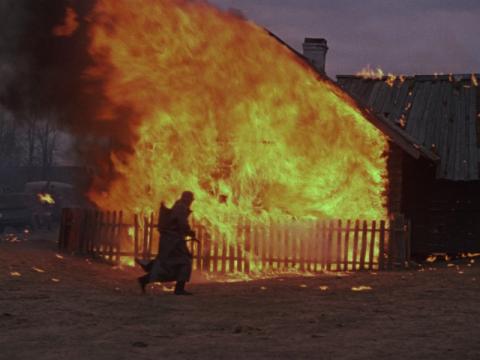
In de eerste helft van The Northman (2022) – Robert Eggers’ versie van de originele Hamlet-saga – is de toeschouwer getuige van een moordpartij. We schrijven 900 na Christus. Een groep Vikingen is een omwalling in de Russische rivierdelta binnengedrongen; getooid in wolvenhuiden beginnen ze met hun toortsen, pijlen en bijlen aan een gruwelijke rooftocht.

Testimony of an Actress
Naughty Boys was the second film De Kuyper made with friends and students, but here for the first time they were joined by a “professional” actress, Linda Polan. The text below is a testimony of her experience of working with De Kuyper, preceded by an introduction by the Belgian filmmaker. Polan: “Looking back as I write this, a year later, I wonder what it was I was so frightened of. I must admit to a terrible fear of being found unsatisfactory – sent back; returned to the manufacturer, like something on approval from Peter Jones. I suppose it was that.”

Een gesprek met Eric de Kuyper
“Enerzijds vereist die enscenering een grote discipline, een soort tirannieke opbouw. Maar vanaf het moment dat het een automatisme geworden is, doe ik niets meer. Bij de opnamen regisseerde ik de acteurs niet meer, tenzij het om minieme technische veranderingen ging. En dan komen er inderdaad hele spontane, directe zaken, die ze op het moment van opname zelf uitvinden, of improviseren. Ze lossen de problemen die ze tegenkomen dan op met hun eigen middelen, waardoor het direct, authentiek overkomt. Ik laat ze vrij op het moment van de opname, en ze geven dus hun eigen ritme aan.”

Laura Wandels Un monde
Hoewel Un monde bij momenten valse hoop wekt, zeker wanneer het spookbeeld van het personage Ana Torrent uit Spirit of the Beehive (Victor Erice, 1973) wordt opgeroepen, is de film uiteindelijk weinig meer dan de zoveelste “mokerslagfilm”, waarvan de zogenaamd ingenieuze insteek in wezen afgezaagd en verstikkend blijkt en het einde als enige doel heeft de toeschouwer een flinke klap te verkopen.

Serge Daney is the force of a surprising opening gambit. In the form of a question, or the negation of obviousness, as a rhyme of ideas or right away with a brutal argumentation that stalemates you, “if... then”. The strategy of the brusque but also panicky outburst. The ground is not prepared, the argument not introduced. He parachutes the reader straight into the war zone. Bullets whizz around his ears, mines surround him. But the author says: I will lead you through it!

Serge Daney, dat is de kracht van de verrassende openingszet. In vraagvorm, of de ontkenning van een evidentie, als een ideeënrijm of meteen met een brutale redenering die je klemzet: “si … alors”. Een strategie van de bruuske, maar ook plankerige uitval, Het terrein wordt niet voorbereid, het argument niet aangebracht. Hij parachuteert de lezer meteen in het oorlogsveld. Kogels fluiten hem om de oren, mijnen liggen alom. Maar de schrijver zegt: lk leid je er door heen!

Eind 1991 verscheen het eerste nummer van Trafic, het testamentaire geesteskind van de vorig jaar overleden criticus Serge Daney. Voor Daney vormden “wereld” en “cinema” een onlosmakelijk geheel. (...) Met Trafic wou hij onderzoeken of vanuit cinema opnieuw een kritische distantie ontwikkeld kon worden. (...) Een gesprek met drie van de vier redactieleden: Raymond Bellour, Patrice Rollet, Jean-Claude Biette, beheerders van een zware erflast. Rollet: “We vertrekken vanuit de overtuiging dat de film moet blijven bestaan omdat ze een unieke ervaring is en blijft. Indien de film zou verdwijnen zou een deel van de mensheid verdwijnen want de cinematografische ervaring kan niet worden omgeschakeld naar een andere.”

Twee of drie dingen die u moet weten over Serge Daney. Geboren in 1944, aan het einde van de oorlog – voor Daney het jaar dat Roberto Rossellini de opnames start voor Roma, città aperta en dus het begin van de moderne cinema. [...] In tegenstelling tot vele critici bij de Cahiers wordt Daney niet zelf filmmaker. Daarvoor heeft hij te weinig verbeelding. Als criticus leidt hij de ene film naar de andere. Zo komt Daney terecht op de plaats die hij eerst zo verafschuwde: de tussenruimte. Het is zijn manier van film maken. Dit handelen met beelden is zijn vorm van verbeelden.

Je découvre cet entretien à 21 ans, sur le chemin qui me conduit d’une cinéphilie classique, principalement américaine (pour ne pas dire hollywoodienne), vers un cinéma moderne et politique (cette découverte vient après celle d’Europe ’51, mais aussi des films militants tournés autour de mai 68). Peu importe si Rossellini exagère, si son constat manque de nuance : son mérite est de cristalliser une interrogation sur ce que l’on peut attendre au juste de l’art en général et du cinéma en particulier. Lui a tranché.

Ik stoot op dit interview op eenentwintigjarige leeftijd, onderweg van een klassieke, hoofdzakelijk Amerikaanse (om niet te zeggen hollywoodiaanse) opvatting van cinefilie naar een moderne en politieke cinema (deze ontdekking komt na die van Europa ’51, maar ook van de militante films gemaakt rond mei ’68). Het doet er niet toe of Rossellini overdrijft of dat zijn observatie nuance mist: zijn verdienste is dat hij tot een concrete vraagstelling komt over wat men precies kan verwachten van kunst in het algemeen en van cinema in het bijzonder. Hij heeft op zijn minst de knoop doorgehakt

I discover this interview at the age of twenty-one, on my way from classic, mainly American (not to say Hollywoodian) cinephilia to modern and political cinema (this discovery comes after that of Europe ’51, but also of the militant films made around May ’68). It doesn’t matter if Rossellini is exaggerating, if his observation lacks nuance: his merit is that he crystallises a question about what exactly one can expect from art in general and from cinema in particular. He has come to a decision.

Beaucoup de choses me plaisent dans ‘A Free Replay’ : des idées clés sur la logique du film comprimées en quelques phrases puissantes, une audacieuse tentative d’interprétation qui est en même temps un manifeste pour l’imagination (et peut-être aussi une ruse sophistiquée), une apparence faussement décousue (« notes » ?) qui cache un travail analytique exhaustif et une forte cohérence interne, des tonnes de recherches obsessionnelles intégrées avec grâce (et parfois de façon fantaisiste) à l’argument principal, une dépendance à la rhétorique et un goût pour ses plaisirs, et un haut degré de performativité, Marker mettant continuellement en scène et exécutant précisément ces idées (l’ellipse, le miroir, la relation espace-temps, la ruse, le replay...) comme un jeu qui alimente sa discussion de Vertigo.

Replaying Marker
There are many things I love in ‘A Free Replay’: core ideas about the film’s logic condensed in a few strong formulations; a daring attempt at interpretation that is also a manifesto for the imaginary (and, perhaps, a sophisticated ruse); a deceptively meandering appearance (“notes”?) under which lies an exhaustive analytical work and a strong internal cohesion; tons of obsessive research gracefully (sometimes whimsically) threaded into the main argument; a trust in rhetoric and a taste for its pleasures; and a high degree of performativity, since Marker is constantly staging, executing and playing with the very ideas (the elliptical, the mirroring, the space-time relation, the stratagem, the replay…) that inform his discussion of Vertigo.

Er zitten in ‘A Free Replay’ veel dingen waar ik van hou: kernideeën over de logica van de film samengebald in een paar krachtige formuleringen, een gewaagde poging tot interpretatie die eveneens een manifest voor de verbeelding is (en misschien ook een geraffineerde list), een bedrieglijk meanderend voorkomen (“notes”?) waaronder exhaustief analytisch werk en een sterke interne samenhang schuilgaan, tonnen obsessief onderzoek die op sierlijke (soms grillige) wijze in de hoofdredenering worden verweven, een vertrouwen in retoriek en een voorliefde voor de genoegens ervan en een hoge mate van performativiteit, aangezien Marker voortdurend precies die ideeën als een spel opvoert en uitvoert die zijn behandeling van Vertigo voeden (het elliptische, het spiegelen, de ruimte-tijdrelatie, de list, het herafspelen...).

Unreal
The words drop in the flow of a larger sentence, a larger point. They occur between parentheses. Is this why – to my knowledge – no one has ever cited them? They are devoted to Alfred Hitchcock’s Marnie (1964) by Raymond Bellour in his major 1977 text “Énoncer”, later included in his collection L’Analyse du film. I first read them ... when I was 18 years old. And then I went around quoting these words – in classrooms, in articles, in conferences – for two decades or more: … that unreal film we call film …

Onwerkelijk
De woorden vallen in de stroom van een ruimere zin, een ruimer punt. Ze staan tussen haakjes. Is dat waarom – bij mijn weten – niemand ze ooit heeft geciteerd? Ze zijn gewijd aan Alfred Hitchcocks Marnie (1964) en komen uit Raymond Bellours belangrijke tekst “Énoncer” uit 1977, die later werd opgenomen in de bundeling L’Analyse du film. Ik las ze voor het eerst (...) toen ik achttien was. En ik bleef de woorden daarna meer dan twee decennia lang citeren – in klaslokalen, in artikels, op conferenties: ... die onwerkelijke film die we film noemen ...

Irréel
Les mots tombent dans le flux d’une phrase plus large, d’une idée plus large. Ils sont entre parenthèses. Est-ce la raison pour laquelle – à ma connaissance – personne ne les a jamais cités ? Ils concernent le film Marnie (1964) d’Alfred Hitchcock et proviennent de l’important texte « Énoncer », écrit par Raymond Bellour en 1977 et repris ensuite dans la collection L'Analyse du film. Je les ai découverts dans une traduction anglaise de Bertrand Augst et Hilary Radner pour l’un des premiers numéros du magazine féministe américain Camera Obscura – j’avais dix-huit ans.

Part 4
The title of the text “Straschek 1963–74 West Berlin” is as simple as it is informative: it is a subjective, self-reflective insight into Günter Peter Straschek’s eleven years in West Berlin. Straschek: “Making movies is, for me, just one means of expressing myself. The idea of blustering my way around this trade to the end of my days (in line with the TVformula: regular staff editor marries secretary while secretly supporting film editor girlfriend) scares me. If, for example, I really stood no chance of making films for TV, I would move to another country or work in an institute or publish a book or go off somewhere for a couple of years and do manual work or take a civil service job. I’d like to live in as unalienated a way as possible; things are awful enough as they are.”

Deel 4
De titel van de tekst “Straschek 1963 – 74 West-Berlijn”, die hier voor het eerst in een Nederlandse vertaling verschijnt, is even eenvoudig als informatief: het is een subjectieve, zelfreflexieve inkijk in Günter Peter Strascheks elf jaar in West-Berlijn. Straschek: “Filmmaken is voor mij gewoon een manier van uitdrukken. Het idee een leven lang in dit vak rond te hangen (volgens de tv-formule: redacteur in loondienst trouwt met secretaresse en heeft monteuse als geheime vriendin) boezemt mij wel angst in. Mocht ik bijvoorbeeld bij de televisie geen productiekansen zien, dan zou ik naar een ander land gaan of in een instituut werken of een boek uitgeven of mij ergens een paar jaar terugtrekken en lichamelijk werk doen of een functie aannemen. Ik wil zo onvervreemd mogelijk leven, het is al klote genoeg.”

Teil 4
Elf ereignisreiche Jahre in Westberlin hinterließen deutliche Spuren im Leben von Günter Peter Straschek. Er verarbeitet sie in dem Text “Straschek 1963 -74 Westberlin”. Der Titel in der dritten Person verweist auf den selbstreflexiven Charakter des Essays. Straschek: “Filmemachen ist mir nur eine Artikulationsmöglichkeit. Die Vorstellung, ein ganzes Leben in diesem Metier herumzuschlawinern (nach der Fernsehformel: festangestellter Redakteur heiratet Sekretärin und unterhält Cutterin als heimliche Freundin), erschreckt mich doch. Sollte ich beispielsweise beim TV ohne jegliche Realisationschancen sein, würde ich in ein anderes Land gehen oder in einem Institut arbeiten oder ein Buch veröffentlichen oder mich für ein paar Jahre irgendwohin zurückziehen und körperliche Arbeit leisten oder eine Funktionärstätigkeit übernehmen. Ich möchte so wenig wie möglich entfremdet leben, es ist immer noch beschissen genug.”

A Conversation with Helke Misselwitz
Helke Misselwitz (1947) distinguished herself as a documenter of lives in disarray and utmost ordinariness with great warmth in the years around German reunification. What is vividly clear in her first feature-length documentary, Winter Adé (1988), which sees the filmmaker travel the country by train one year before the fall of the Berlin Wall, is the interest in women’s societal and social roles in particular. Misselwitz: “I think every life is worth telling. It’s just that not all people can tell interesting stories about it. One becomes a kind of helper. You help to describe the lives of others.”
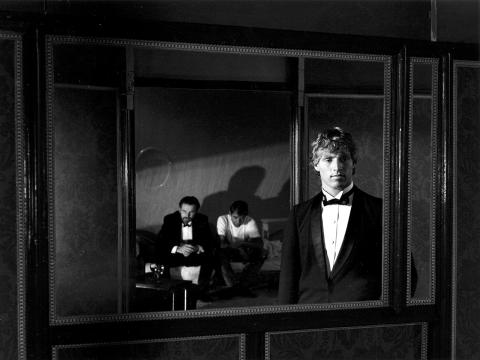
Fragmenten uit een interview met Eric de Kuyper en Paul Verstraten
A Strange Love Affair (1985), de meest narratieve film van Eric de Kuyper, is een liefdesverhaal tussen een student en zijn veertigjarige professor in filmstudies (zoals De Kuyper destijds zelf was), gespecialiseerd in Hollywooddrama’s. Eric de Kuyper: “We willen dat de toeschouwer zich beelden, of een sfeer herinnert uit de film. Ik ben ook criticus geweest, en je ziet zoveel films waar je je achteraf geen beeld meer van herinnert. Ik dacht dan, als ik films maak, dan moeten de mensen zich er toch nog enkele beelden van herinneren. Zodat er toch nog iets overblijft. Dàt moet cinema zijn: je moet beelden overhouden. En dat is de kracht van grote cineasten: dat ze je beelden inprenten zodat je twintig jaar later nog altijd kunt zeggen: ‘lk heb die film gezien.’”
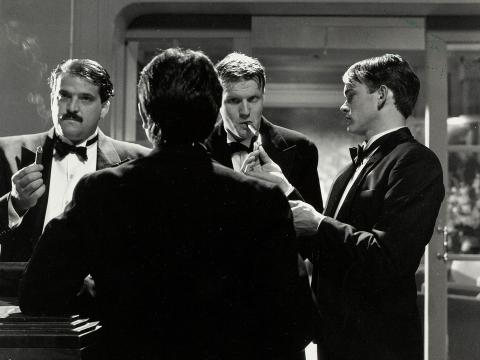
Naughty Boys, nostalgie volgens Eric de Kuyper
Na in 1983 te debuteren met Casta Diva maakte Eric de Kuyper in 1984 meteen Naughty Boys, een film die hij zelf omschreef als “a sad musical comedy” en waarin hij hulde brengt aan de oude musicals en komedies. De Kuyper: “Naughty Boys heeft iets anachronistisch, iets ouderwets, iets blasé. Maar die musicals, die stukken toen hadden die langdradigheid, die verveling niet. Het was een uitdaging om met gevoelens van nu in een genre van toen iets te vertellen... alsof een Antonioni een musical zou maken...”

Eric de Kuyper over Casta Diva
Casta Diva was de debuutfilm van de Belgische filmcriticus/docent/academicus/televisieproducent en -programmator Eric de Kuyper, een film die in 1983 internationaal meteen werd opgemerkt. De Kuyper: “Het is een moeilijke film omdat het moeilijk is om aandachtig naar eenvoudige beelden te kijken; je bent met zeer elementaire cinema bezig, met beeld en geluid (muziek). Hoe minder je in werking zet bij film, hoe eenvoudiger het wordt maar hoe meer inspanning je van de toeschouwer verlangt omdat het bijna Art brut is, bijna naïef. Eigenlijk nodig ik de toeschouwers uit om hun kijkgedrag te wijzigen.”

Woorden hebben een geschiedenis. Wat het woordenboek ons zegt over projecteren, eertijds, roept “buitengooien” op, terwijl het woord project, dat dezelfde oorsprong heeft, ‘alles waarmee de mens beoogt de wereld of zichzelf op een bepaalde manier te wijzigen’ voor de geest haalt.
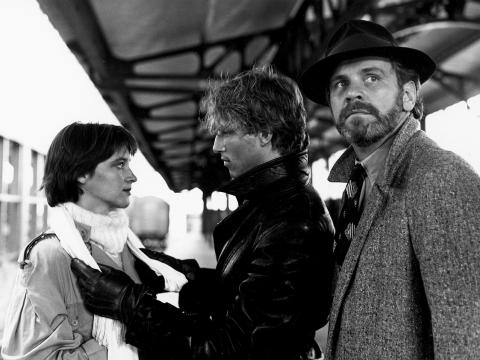
Mijmeringen van Eric de Kuyper
Met Eric de Kuyper als rug en spilfiguur heeft de Nijmeegse school in 1986 al vier films afgeleverd: Casta Diva, Naughty Boys, Mathilde (van Emile Poppe) en A Strange Love Affair (samen met Paul Verstraten). Constanten zijn dat deze films heel snel zijn gemaakt, met weinig geld, dat er gretig uit films in wordt geciteerd, dat ze in zwart-wit zijn en dat ze andere visuele en auditieve prikkels uitsturen dan de doorsnee speelfilm. Een bloemlezing uit de Kuypers mijmeringen.

Eric de Kuyper over Casta Diva en Naughty Boys
Na zijn debuut Casta Diva (1982) leverde Eric de Kuyper in 1984 Naughty Boys af. Een nieuwe film van de Belgische regisseur die tot dan toe vooral actief was geweest als televisieproducent- en programmator, schrijver, docent en onderzoeker. “Ik weet uit ervaring hoe veel andere mensen films maken of gemaakt hebben en ik had voor mezelf besloten: nou, op die manier maak ik vast geen films! Alleen wist ik niet zo meteen hoe eraan te ontsnappen. Maar voor mij, zoals ik eerder ook al aangaf, is een film maken een soort feestje, een soort plezierige samenwerking van verschillende mensen die graag met elkaar werken. En dat is de basis geworden.”

In 1982 debuteerde de Belgische filmcriticus/docent/academicus/televisieproducent en -programmator Eric de Kuyper met Casta Diva, een film die internationaal meteen werd opgemerkt. Deze tekst is zijn toelichting bij de subsidieaanvraag voor het Nederlands filmfonds, waarin hij vooral tracht zijn fascinatie te omschrijven en niet via woorden de beelden te evoceren. “Mijn weigering om een klassiek scenario te schrijven [mag] geïnterpreteerd worden als functioneel. In die zin dat ik van mening ben dat: 1. niet alle films ‘klassieke speelfilms’ hoeven te zijn; 2. men in bepaalde contextuele (voornamelijk financiële) omstandigheden naar andere filmvormen moet streven. Geen speelfilm betekent dus niet automatisch een ‘documentaire’ of ‘dus, een experimentele film’.”
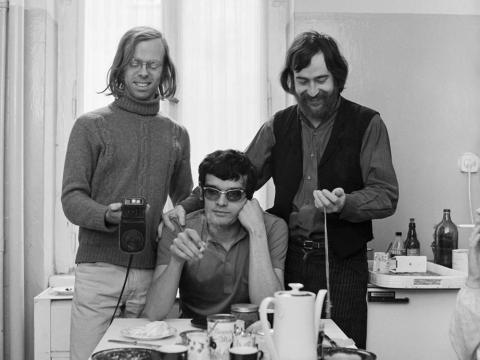
Part 3
The title of the text “Straschek 1963–74 West Berlin” is as simple as it is informative: it is a subjective, self-reflective insight into Günter Peter Straschek’s eleven years in West Berlin. Straschek: “I’ve never enjoyed teaching or gained anything from it, least of all in a state college of fine arts, those state-run breeding grounds for irrationality, where teachers and students are out to do each other one better at cooking up pretentious ideas.”

Deel 3
De titel van de tekst “Straschek 1963 – 74 West-Berlijn”, die hier voor het eerst in een Nederlandse vertaling verschijnt, is even eenvoudig als informatief: het is een subjectieve, zelfreflexieve inkijk in Günter Peter Strascheks elf jaar in West-Berlijn. Straschek: “Ik heb lesgeven nooit leuk gevonden, ik heb er nooit veel aan gehad. Zeker niet op een hogeschool voor beeldende kunsten, die door de staat gerunde broeinesten van irrationaliteit waar docenten en studenten elkaar met hun pretentieuze ideeën de loef proberen af te steken.”
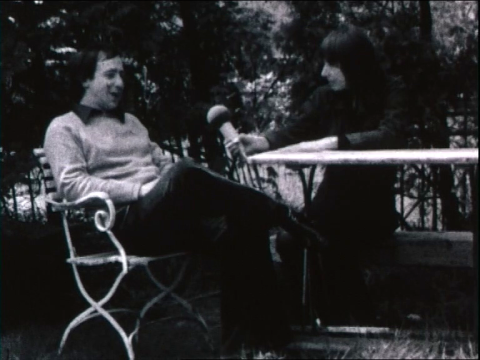
Teil 3
Elf ereignisreiche Jahre in Westberlin hinterließen deutliche Spuren im Leben von Günter Peter Straschek. Er verarbeitet sie in dem Text “Straschek 1963 -74 Westberlin”. Der Titel in der dritten Person verweist auf den selbstreflexiven Charakter des Essays. Straschek: “Unterrichten hat mir nie Spass gemacht, mir nie etwas gegeben. Am wenigsten an einer Staatlichen Hochschule für Bildende Künste, diesen staatlichen Brutstatten der Irrationalität, wo Lehrer und Schüler sich an verschmockten Ideen zu übertreffen versuchen.”

Asked about his use of sound, Apichatpong has this to say: “I want it to resonate in the heart.” Does it resonate in the world? “What's that sound?” Apichatpong's films suggest many answers to this recurring question, or no answers at all, only openings. Loud bang in sleep, subliminal roar, deep groaning voices of howler monkeys; all inchoate, the invisible entity that stalks us through life. Sound is here on earth with us, calling to another place, beyond physical life.

Schrijven over Ophüls of Ozu op een hoekje van de keukentafel... omgeven door de geur van het dagelijks leven. Koken, “eten maken” – en zich zo beschermen tegen de kwelling van het schrijven. Een houding die voor mij moeilijk te begrijpen is, zo verschillend is mijn eigen benadering van het schrijven. (En waarschijnlijk ook die van het koken.) Dat deze prachtige teksten zijn ontstaan tussen pruttelende boeuf bourguignon en flan caramel die nog bereid moet worden, blijft voor mij een raadsel.

Writing about Ophüls or Ozu on a corner of the kitchen table... surrounded by the smell of everyday life. Cooking, “making food” – thus protecting herself from the torment of writing. An attitude that is difficult for me to understand, my own approach to writing being quite different. (The same goes for my approach of cooking.) It remains a mystery to me that these beautiful texts originated between simmering boeuf bourguignon and caramel flan, still to be prepared.
Deel 2
De titel van de tekst “Straschek 1963 – 74 West-Berlijn”, die hier voor het eerst in een Nederlandse vertaling verschijnt, is even eenvoudig als informatief: het is een subjectieve, zelfreflexieve inkijk in Günter Peter Strascheks elf jaar in West-Berlijn. Straschek: “In de herfst van ’63 was ik vastbesloten om naar de DDR te verhuizen. In een fabriek wilde ik werken. Meer zelfs, ik vond dat ik mijn bestaan fundamenteel moest veranderen. In Berlijn (DDR) stuurden ze me echter dagenlang van het ene ministerie naar het andere en weigerden ze beleefd. Een kritiek rondbazuinende, werkloze Oostenrijker kon deze eerste Duitse arbeiders- en boerenstaat niet gebruiken. Daar zal ik hen eeuwig dankbaar voor zijn.”

Teil 2
Elf ereignisreiche Jahre in Westberlin hinterließen deutliche Spuren im Leben von Günter Peter Straschek. Er verarbeitet sie in dem Text “Straschek 1963 -74 Westberlin”. Der Titel in der dritten Person verweist auf den selbstreflexiven Charakter des Essays. Straschek: “Im Herbst ’63 war ich entschlossen, in die DDR zu übersiedeln. In einer Fabrik wollte ich arbeiten, mehr noch: ich meinte mein Dasein grundsätzlich verändern zu müssen. Doch in Berlin (DDR) schickte man mich tagelang von einem Ministerium zum anderen, lehnte höflich ab. Einen herumkritisierenden berufslosen Österreicher konnte dieser erste deutsche Arbeiter- und Bauernstaat nicht gebrauchen. Dafür will ich ihm ewig dankbar sein.”
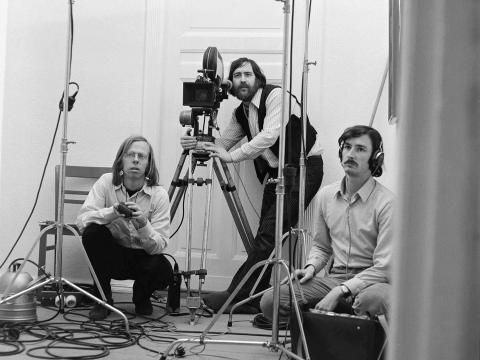
Part 2
The title of the text “Straschek 1963–74 West Berlin” is as simple as it is informative: it is a subjective, self-reflective insight into Günter Peter Straschek’s eleven years in West Berlin. Straschek: “In fall 1963, I was determined to settle in the German Democratic Republic. I wanted to work in a factory. More: I was convinced that I had radically to alter my existence. In East Berlin, however, I was sent from one ministry to the other for days on end, and my request was politely declined. The first German workers’ and peasants’ state had no use for an Austrian without a profession who went around criticizing everything. I will be forever grateful to it for that.”

An Interview with Gus Van Sant
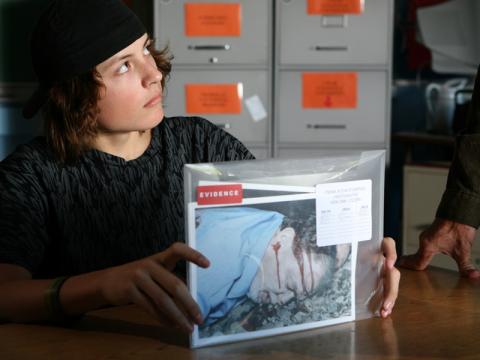
This year, the American film director Gus Van Sant created his first stage production called Trouble, a musical about Andy Warhol. On the occasion of the premiere in De Singel in Antwerp, Sabzian has a conversation with Van Sant to talk about four films that marked a period of formal experimentation in his oeuvre: Gerry (2002), Elephant (2003), Last Days (2005) and Paranoid Park (2007). Gus Van Sant: “The blocking itself is the main feature of the scene. When you’re using a storyboard, you’re adapting the locations and the actors to the storyboard, which is already fixed when the characters come in the frame. This is the main reason I started to work without a storyboard because the characters can work the scene better. They can make things happen within that timeframe as opposed to working with single shots.”
Een interview met Gus Van Sant
De Amerikaanse filmregisseur Gus Van Sant maakte vorig jaar zijn eerste theaterproductie, Trouble, een musical over Andy Warhol. Bij de première van het stuk in De Singel in Antwerpen sprak Sabzian met Van Sant over vier van zijn films die samen een periode van vormelijk experiment betekenen binnen zijn oeuvre: Gerry (2002), Elephant (2003), Last Days (2005) en Paranoid Park (2007). Gus Van Sant: “Het afbakenen is het belangrijkste kenmerk van een scène. Wanneer je een storyboard gebruikt, pas je de locaties en de acteurs aan aan het storyboard, dat al vastligt wanneer de personages in beeld komen. Dat is de belangrijkste reden waarom ik zonder storyboard ben gaan werken, omdat de personages dan beter in de scène zitten. Ze kunnen dingen laten gebeuren binnen een tijdsbestek en dat lukt niet wanneer je met losse shots werkt.”

Van bij het begin plaatst Paranoid Park ons als publiek te midden van de vreemde dynamiek van Alex’ gedachten en emoties. Omstandigheden, gebeurtenissen, gedachten, observaties en gevoelens worden in stukken en brokken prijsgegeven. Het is aan de luisteraar/toeschouwer om de puzzel te leggen vanuit een accurate en empathische waarneming. Invoelen is hier belangrijker dan het verhaal “begrijpen”. De manier waarop Van Sant geluid, muziek, tekst en beeld met elkaar vervlecht en de vrijheid die hij zich neemt om met de klank laag per laag de innerlijke wereld van Alex op te bouwen en de toenemende vervreemding ten opzichte van de buitenwereld weer te geven, intrigeert. Het is alsof hij audiovisueel “schildert” van binnenuit: intelligent, met kennis van het medium en vooral met een onvoorstelbare vrijheid om te exploreren en te experimenteren. In zijn klank bouwt hij een “kleurenpalet” op.
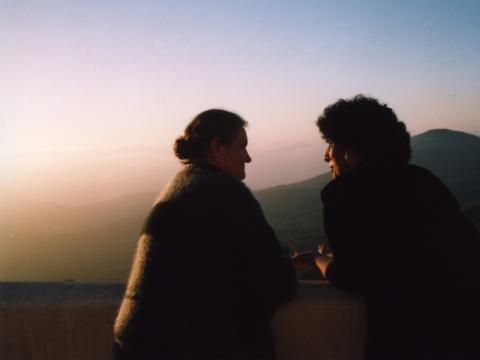
Encounters (2006), directed and edited by Pierre-Marie Goulet, is a film whose 105 minutes unfold much longer periods of time, counted in years and decades, through voices, places, natures and faces. The filmmaker himself readily accepts that he is one of those travellers called smugglers [passeurs], had the term not been sullied by other connotations.

Over Nomadland (Chloé Zhao, 2020)
Nomadland is opgedragen aan “zij die moesten vertrekken”, een groeiende groep mensen in Amerika die niet genoeg verdienen voor een huis en zo tot een nomadische levensstijl zijn gekomen. Naast vloeiende tracking shots van de Amazon-fabriek bevat Nomadland adembenemende natuurbeelden en intimistische portretten van mensen die van hun noodlot een levensstijl hebben gemaakt. De ontroering van de toeschouwer heeft maar een klein rouwrandje. De gedachte dat er iets mis is met een samenleving waarin mensen in extreem precaire situaties terechtkomen dooft al snel uit in de paarse avondschemering. Ze zijn arm maar gelukkig. En ergens sluimert de gedachte “ze zijn gelukkig omdat ze arm zijn”.

“Filmen” lijkt me een merkwaardig werkwoord. Als het op het schrijven van een boek aankomt, zeg je niet “boeken”. En peindre heet niet tableauter. Hieruit blijkt dat, wat film betreft, het eindproduct de overhand neemt en een werkwoord wordt.

“When we left the theatre at the Viennale after seeing Cow by Andrea Arnold, I was brushing the tears away from my eyes. Is an insightful conversation possible when one is clouded by emotions? I do think this is possible, because what happened during this film might be of interest to us.”

Part 1
The title of the text “Straschek 1963–74 West Berlin” is as simple as it is informative: it is a subjective, self-reflective insight into Günter Peter Straschek’s eleven years in West Berlin. Straschek: “The discrepancy between subjective pleasure and objective cognition troubles me less where movies are involved than anywhere else. I never have been able to understand the constructions and contortions of certain, usually “conscious,” movie fans who go to great lengths to transcend impressions based on their own likes and dislikes by means of quasi-objective judgments. I, in contrast, don’t find it embarrassing to exploit precisely this subjective freedom. Everyone has (in cinema too) his or her favourite tearjerker.”

Deel 1
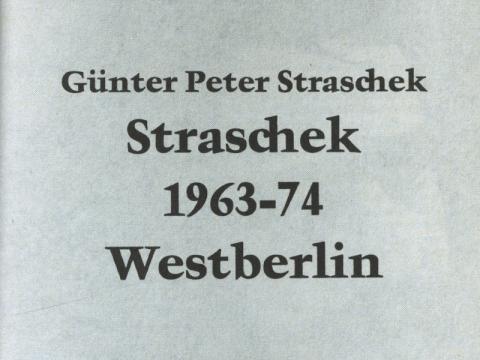
De titel van de tekst “Straschek 1963 – 74 West-Berlijn”, die hier voor het eerst in een Nederlandse vertaling verschijnt, is even eenvoudig als informatief: het is een subjectieve, zelfreflexieve inkijk in Günter Peter Strascheks elf jaar in West-Berlijn. Straschek: “Bij film baart de discrepantie tussen subjectief genoegen en objectieve kennis mij minder zorgen. Ik heb nooit de gedachteconstructies en buitelingen kunnen begrijpen van sommige “bewuste” filmfans die moeite doen om hun persoonlijke smaak te overstijgen door een quasi-geobjectiveerd oordeel. Ik geneer mij in het geheel niet om precies van deze subjectieve ruimte gebruik te maken – tenslotte heeft iedereen (ook in de bioscoop) zijn tranentrekkers.”
Teil 1
Elf ereignisreiche Jahre in Westberlin hinterließen deutliche Spuren im Leben von Günter Peter Straschek. Er verarbeitet sie in dem Text “Straschek 1963 -74 Westberlin”. Der Titel in der dritten Person verweist auf den selbstreflexiven Charakter des Essays. Straschek: “Die Diskrepanz zwischen subjektivem Gefallen und objektiver Erkenntnis würde mich überall mehr als beim Movie beunruhigen. Nie konnte ich die Konstruktionen und Purzelbäumer einzelner, meist “bewusster” Kinofans verstehen, angestrengt Ihren persönlichen Geschmackseindruck durch ein quasiobjektiviertes Urteil zu transzendieren. Ich hingegen geniere mich nicht im Ausnützen gerade dieses subjektivierten Freiraums - es hat doch jeder (auch im Kino) seine Heuler.”

Straschek 1963 - 74 West Berlin (Filmkritik 212, August 1974)
At the end of the 1960s, there was a change of generations at the magazine [Filmkritik] and the editorial work was henceforth led by a collective, the film critics’ co-operative. From that moment, the magazine stopped being a film magazine oriented towards current cinema events and, instead, published thematic issues devoted entirely to one subject and without any formal guidelines. The issues’ respective guest authors and designers were free from editorial intervention. Only these conditions made it possible for literary and film personalities such as Straschek to cover an entire issue with a thoroughly composed biographical essay.

Straschek 1963 - 74 West-Berlijn (Filmkritik 212, augustus 1974)
Aan het eind van de jaren zestig vond er een generatiewisseling plaats bij het tijdschrift [Filmkritik]. Voortaan werd de redactie geleid door een collectief, de coöperatieve van filmcritici. Het blad verloor zijn karakter als filmtijdschrift gericht op de filmactualiteit. In plaats daarvan verschenen er themanummers die volledig gewijd waren aan één onderwerp en waarvoor geen vormelijke richtlijnen bestonden. De betreffende gastauteurs en ontwerpers van de nummers waren niet onderworpen aan enige tussenkomst van de redactie. Alleen deze omstandigheden maakten het mogelijk dat een literaire en filmpersoonlijkheid als Straschek een heel nummer voor zijn rekening nam met een grondig gecomponeerd biografisch essay.

Straschek 1963 – 74 West-Berlijn (Filmkritik 212, augustus 1974)
Zu Ende der 1960er Jahre stand ein Generationswechsel in der Zeitschrift [Filmkritik] an und die redaktionelle Arbeit wurde seitdem von einem Kollektiv, der Filmkritiker-Kooperative, geleitet. Ab diesem Zeitpunkt verlor das Heft vollständig seinen Charakter als einer am aktuellen Kinogeschehen orientierten Filmzeitschrift. Stattdessen erschienen Themenhefte, die sich voll und ganz einem Sujet widmeten und für die keinerlei formalen Vorgaben bestanden. Die jeweiligen Gastautor*innen und Gestalter*innen der Nummern unterlagen keinen Eingriffen der Redaktion. Nur unter diesen Bedingungen war es dann auch möglich, dass literarisch und filmisch bewanderte Persönlichkeiten wie Straschek ein ganzes Heft mit einem durchkomponierten biographischen Essay bespielen konnten.

In het Westen wordt het werk van Ozu meestal in verband gebracht met de cultuur waartoe hij behoorde en waarmee hij zonder twijfel een grote affiniteit had: het zenboeddhisme. Volgens de drie meest toonaangevende commentatoren, Donald Richie, Noël Burch en Paul Schrader, draaien de films van Ozu rond een verzoening met het onherroepelijke. (...) Toch is er ook een totaal andere interpretatie van Ozu’s werk mogelijk. (...) In de interpretatie van Deleuze en Hasumi is Ozu niet langer slechts een regisseur van de leegte of de reductie, en wil hij ons niet zonder meer aanmanen tot de aanvaarding van onze eindigheid. Volgens hen is het er Ozu allerminst om te doen verschillen uit te wissen maar wil hij ze net zichtbaar maken.

“Ik voel me veilig met een camera”
John Wilson is een documentairemaker en voormalig privédetective. Zijn idiosyncratische manier van verhalen vertellen navigeert door zijn eigen neuroses en vat tegelijkertijd de uitgestrekte essentie van New York en haar inwoners. Wilson: “Zelfs in de meest nauwkeurige narratieve voorstellingen van New York City is er precies nog steeds iets dat ontbreekt. (...) De stad zelf biedt al de rijkste taferelen op de planeet. Het feit dat mensen het vervolgens verdunnen met kunstmatig spul is jammer. Ik wil zoveel mogelijk van New York filmen omdat dingen hier zo snel verdwijnen. Die impuls is nooit echt weggegaan.”
John Wilsons apologie van het banale beeld
“Als je maar lang genoeg alles filmt wat je aandacht trekt, vormen er zich langzaamaan patronen in je beelden. Maar de beelden wijzen ook terug. In dit geval tonen ze ons niet alleen Manhattan, ze tonen net zo goed John Wilson: een introverte man van in de dertig die met zijn cameraatje door New York trekt. Filmen is voor hem een manier om naar buiten te treden, om met mensen in contact te komen, om te spreken. Het lijkt alsof hij op een gegeven moment in zijn leven besefte dat hij zijn schuchtere karakter, dat hem tot dan toe zo vaak in de weg had gezeten, ook ten goede kon gebruiken. Op zijn eigen manier zette hij vervolgens zijn verlegenheid in – als een wapen en als een schild.”
Conversations about Kind Hearts
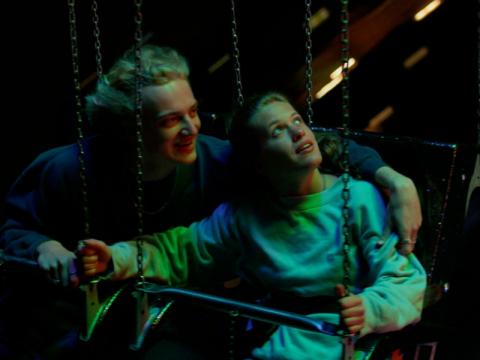
Gerard-Jan Claes and Olivia Rochette’s new, long documentary, Kind Hearts, follows Billie and Lucas, a young couple from Brussels. Once again, connection through exchange is central. (...) Exchanging views is a dynamic process for them in which observation is central. With great attention and dedication to detail, they capture the adolescent lives without wanting to leave their mark on them. In this way, reality unfolds within a carefully composed cinematic space. Rochette: “Films can be very manipulative. We try to make films that offer an open space rather than a trajectory with clear reference points for emotions or interpretations.”

Gesprekken over Kind Hearts
Gerard-Jan Claes’ en Olivia Rochettes nieuwe lange documentaire Kind Hearts volgt Billie en Lucas, een jong Brussels koppel. Ook hier staat verbinding door uitwisseling centraal. (...) Met elkaar van gedachten wisselen is bij hen een dynamisch proces waarbij observatie centraal staat. Met een grote aandacht en toewijding voor detail wordt het leven van jongeren vastgelegd, zonder er een stempel op te willen drukken. Zo ontplooit de realiteit zich binnen een zorgvuldig gecomponeerde filmische ruimte. Rochette: “Films kunnen heel sturend zijn. Wij proberen films te maken die een open ruimte bieden in plaats van een parcours met duidelijke referentiepunten voor emoties of interpretaties.”

In the coming months, Sabzian will publish a dozen new translations of the work of the German film critic Frieda Grafe, the “queen of German film criticism”. Frieda Grafe: “Ozu is a Zen filmmaker who, in the position of the one who looks and waits, does not want to change the world, but makes himself flat and indifferent like a surface of water, ready for the impressions of the world. When filming, the camera is always a fraction off from his gaze: the space gives a fragmented impression.”
“When it comes to men and women, I feel like I’m honest, and I think that both worlds need to collide or to circumvent each other in order to try and live together.”

Een ingang tot de cinema en het denken van Fernand Deligny
Deze film [Le moindre geste] – weerbarstig toevalsdocument, ruwe parel – lijkt te ontglippen aan elke poging tot categorisering. Hetzelfde zou je kunnen zeggen van de initiatiefnemer, Fernand Deligny (1913-1996). Deze Franse pedagoog, die een leven lang werkte met delinquente, psychisch kwetsbare en mentaal beperkte kinderen en jongeren, valt evengoed schrijver, poëet, filosoof, cineast, … te noemen. Zijn nalatenschap bevat allerlei artefacten: essays, verhalen, scenario’s, toneelstukken, sprookjes, brieven en cartografische tekeningen. Le moindre geste is de eerste van vier films die hij realiseerde in nauwe samenwerking met een wisselende entourage van medewerkers.

Zéro de conduite and L’Atalante by Jean Vigo
Vigo’s films belong to surrealism. Not the Breton school with its suridealism, its amour fou and, for all that, its paternalism. Vigo is one of the “enemies from within”, Bataille, Artaud, life above form, eroticism, the hollowed-out subject. The destruction of the social superstructure becomes the basis of all revolutionary action.

Projections. Provisionals. Provisions
Previously, images were in the world. Today, it is the world that is swimming in an ocean of images. Our real, material and unique world; woven from and overflowing with real, immaterial, numbered (made of numbers), innumerable images. If one wants to observe contemporary cinema one must place it in the context of this exponentially rising quantitative and qualitative power of images, question the role it has played and still plays.

Provisorische projecties en provisies
Vroeger bevonden beelden zich in de wereld. Vandaag is het de wereld die baadt in een zee van beelden. Onze werkelijke, materiële en unieke wereld; geweven en overlopend van werkelijke, immateriële, genummerde (uit getallen bestaande), ontelbare beelden. De hedendaagse cinema observeren dwingt ons ertoe hem in de context te plaatsen van de exponentieel stijgende kwantitatieve en kwalitatieve macht van beelden en ons af te vragen welke rol cinema hierin heeft gespeeld en nog steeds speelt.

Projections. Provisoires. Provisions
Auparavant, les images étaient dans le monde. Aujourd’hui, c’est le monde qui baigne dans un océan d’images. Notre monde réel, matériel et unique ; tissé et débordé d’images réelles, immatérielles, nombrées (constituées de chiffres), innombrables. Observer le cinéma contemporain oblige à inscrire celui-ci dans le contexte de cette exponentielle montée en puissance quantitative et qualitative des images, à s’interroger sur le rôle qu’il y a joué et joue encore.

Annexe du State of Cinema 2021
Décaméron électronique, La Loupe constitua l’une des plus généreuses, prodigues, désintéressées, efficaces des expériences collectives de cinéphilie, conduite au cours du premier enfermement pandémique généralisé. Pendant 17 mois (mars 2020-12 juillet 2021), La Loupe permit à des milliers de personnes de par le monde (jusqu’à 16 000) d’échanger fichiers de films non commercialisés, textes, idées, informations et suggestions dans un esprit de découverte effervescent. A l'occasion de son State of Cinema, Nicole Brenez ajoute en annexe cette proposition de Luc Vialle : « Bonsoir les loupistes, je vous propose en guise d’anniversaire de La loupe bien en retard un post sur le sexe, les sexualités et genres au cinéma ainsi que la représentation des hommes, des femmes et des Queers. »

A.I at War is not a war film as I have made them in the past. I’m not looking to film the battle so much as the symbol of destruction and devastation. For me, the apocalyptic atmosphere is a metaphor for our humanity today.

A.I. at War n’est pas un film de guerre comme j’ai pu en tourner. Je ne cherche pas tant à filmer la bataille que le symbole de la destruction et de la dévastation. Pour moi, l’atmosphère apocalyptique est une métaphore de notre humanité actuelle.

Harun Farocki, in all his works, elaborates and un folds an intensive and meditated form of encounter that we have named “visual study”. What is visual study? It is a matter of a frontal encounter, a face-to-face encounter between an existing image and a figurative project dedicated to observing It – in other words, a study of the image by means of the image itself.
The New Exigencies: For a Republic of Images
I wish to question what could be an internationalism for today, in the field of cinema – a critical internationalism that defies the powers of state, nation, administration and global economy. Almost all the examples I will cite are provided by filmmakers who are trying to help, through images, people other than their own. Thanks to the films themselves, it seems possible to consider, even very briefly, new proposals concerning the conception of history; the conception of the history of cinema; of an oeuvre; of the filmmaker; of political forms; of curating; and, finally, of spectatorship.

“For It Is the Critical Faculty That Invents Fresh Forms” (Oscar Wilde)
With a few remarkable exceptions (Jean Mitry, Jonathan Rosenbaum, Noel Burch ...), the history of cinema has mainly been recounted from the industry’s point of view. May this contribution to a history of forms help us to escape such a dominant ideology and reconsider the works and the artists from a different perspective. Today the violence of the cultural industry is so cynically triumphant that it is possible to establish a law of inverse proportions between the social visibility of a film and its real eminence.
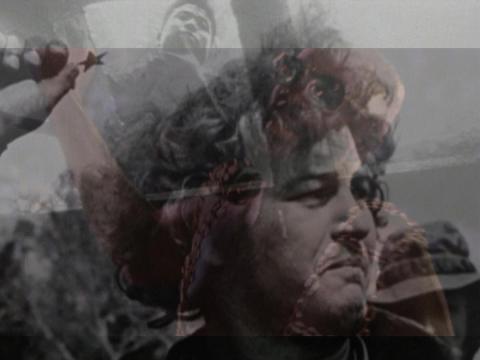
X+ by Marylène Negro
In 2010, with the full-length film X+, Marylène Negro takes up a new dimension of human experience: the collectivity. “A Picture of Us”. What are the aggregating forces that bring forth this drive – brusque or slow, woven from facts, simplifications and resonances that we call, always approximately, collective history? Unendlessly, the cinema records silhouettes, groups, crowds, masses – fleeting passers-by of a period they are going through, tiny extras of a zeitgeist that carries them along.

The House Is Black by Forugh Farrokhzad
Forugh Farrokhzad has never made a film nor led a team before. But she transforms all of these constraints, of this collective and intimate suffering, into a blaze of intelligence, despair and love in the fire of which a unique visual poem has been forged.

Correspondence Between Jonas Mekas and José Luis Guérin
Between 2010 and 2011, the filmmakers and artists José Luis Guérin and Jonas Mekas exchanged nine video letters as the result of an initiative of Jordi Balló. The result was a feature-length film of infinite tenderness, assembling a personal diary, travelogues and key reflections about images. Existential cinephilia, poetic horizons, artistic kinship, elegiac sensibility, a community of views, radicalness, autonomy, all these things bring together these two “friends in cinema” (as Jonas Mekas puts it), whose respective works are characterised by the renewal of descriptive forms and the challenges of observation.
Nicole Brenez is an essential figure in film criticism and contemporary cinema studies. Her analytical and passionate approach to cinema, emerging from her extraordinary creative freedom, has earned her the respect and admiration of critics all over the world. Her widely followed work has never ceased to highlight the exciting challenges of engaged cinema, the kind that commits to artistic investigation as well as to the urgent social and political issues that concern us all.
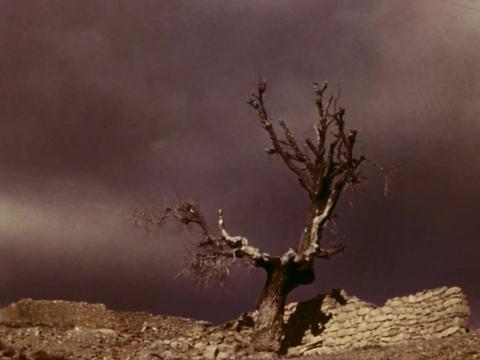
Every film by René Vautier constitutes a pamphlet, a shield for the oppressed and the victims of history, a little war machine for justice. And like weapons in an underground cell, these films serve, are donated, exchanged, lent, thrown away, destroyed, lost, or hidden and sometimes forgotten in their hideout for a long time. In this regard, every work by René Vautier constitutes a special case, an episode in probably the most novelistic story in the history of cinema. Full of scars though they might be, these films are of a real beauty, not only in the aesthetic and stylistic sense, but in the sense of a cinema elevated to the plenitude of its necessity and its powers.

Few theorists have been as critical of cinema as T.W. Adorno. Critical in this context implies all of the following: methodical, negative and subtle. … For [Adorno], cinema and popular or popularised music … were emblematic of how works of art had become commodified cultural products. A cultural “commodity” represents simultaneously the means of a confiscation, a mode of corruption, a simulacrum, and a sort of formal joke. … [C]inema, which arose out of techniques of recording and whose primary goal is reproduction organised into an industry, appears from the start as a powerful instrument of domination, propaganda and falsification. Adorno’s achievement consists in his having furnished us with instruments for understanding ideology as much as for defining the concept of art.

Le temps présent du cinéma
J’ai une bonne nouvelle, pour tout le monde : le cinéma est en crise. Et d’une certaine façon c’est à peine une nouvelle, il n’a cessé de l’être depuis qu’il existe. C’est non pas le signal d’un danger pour le futur – le futur est une énigme et il faut beaucoup d’irresponsabilité pour tenter d’en formuler l’hypothèse, d’en prétendre déchiffrer les arcanes – mais plutôt celui d’une sensibilité, sismographique, aux enjeux du présent. Et je pense qu’il n’y a pas d’autre symptôme, plus pertinent, de la vitalité d’un art que sa constante remise en cause selon la constante reformulation de notre monde. La véritable question serait plutôt de savoir si les forces qui transforment le monde sont aussi celles qui transforment les arts, comment les unes se nourrissent des autres, à moins qu’elles ne soient antagonistes.

Cinemaul la timpul prezent
Am o veste bună pentru toată lumea: cinemaul se află în criză. Aceasta nici nu este o noutate: cinemaul n-a încetat să fie în criză de când există pe lume. Nu este semnalul unui pericol pentru viitor – viitorul este o enigmă și e nevoie de multă iresponsabilitate pentru a încerca să formulăm ipoteze pe marginea lui, să pretindem că-i descifrăm arcanele –, ci mai degrabă semnalul unei sensibilități seismografice față de mizele prezentului. Și cred că nu există alt simptom mai pertinent al vitalității unei arte decât permanenta sa autoplasare sub lupă, în funcție de permanenta reformulare a lumii noastre. Întrebarea veritabilă ar fi mai degrabă dacă forțele care transformă lumea sunt aceleași care transformă și artele, sau, în caz că sunt două seturi diferite de forțe, cum se hrănesc unele din altele, sau dacă nu cumva sunt antagonice.
Filmens vara 2020
Jag har en god nyhet för oss alla – filmen är i kris. Och på ett sätt är det inte ens en nyhet, för aldrig under sin existens har den upphört att vara det. Det är inte heller signalen för en framtida fara – för framtiden är en gåta som det krävs ett stort mått av oansvarighet för att formulera en hypotes om, påstå sig kapabel att tyda hemligheterna till – utan mer en seismografisk känslighet för vad som står på spel i nutiden. Jag tänker att det finns inget annat eller mer träffande symptom på livskraften i en konstart, än dess konstanta ifrågasättande av sig själv, utifrån en konstant omformulering av världen. Den verkliga frågan är att ta reda på om krafterna som förändrar världen är desamma som förändrar konsterna, hur dessa befruktar varandra, ifall de nu inte är varandras motsatser.

Prítomnosť filmu
Mám pre všetkých dobrú správu: film je v kríze. V istom zmysle to nie je žiadna novinka, lebo v nej neprestal byť, odkedy existuje. Nejde pritom o signál nebezpečenstva pre budúcnosť – budúcnosť je záhada a na formulovanie hypotéz o nej či na predstieranie, že vieme rozlúštiť jej tajomstvá, treba veľkú dávku nezodpovednosti –, ale skôr signál až seizmografickej citlivosti na to, čo sa práve deje. A domnievam sa, že neexistuje iný, presnejší symptóm životaschopnosti nejakého umenia, než jeho nepretržité sebaspochybňovanie na základe nepretržitých reformulácií nášho sveta. Skutočnou otázkou je skôr to, či sú sily, ktoré premieňajú náš svet, zároveň silami, ktoré premieňajú aj umenie, a ako sa jedny sýtia druhými, ak náhodou nestoja proti sebe.
Filmens nuværende tilstand
Jeg har en god nyhed til jer allesammen: Filmkunsten er i krise. Og på en måde er det slet ingen nyhed, for filmkunsten har altid været i krise, lige siden den blev til. Det er heller intet varsel om nogen fremtidig fare – fremtiden er et mysterium, og det kræver megen uansvarlighed at gøre sig nogle formodninger om den, at foregive at kunne tyde dens hemmeligheder – men snarere et udtryk for en seismografisk sensibilitet over for nutidens udfordringer. Og jeg tror ikke, at der findes et andet, mere sikkert tegn på en kunstforms levedygtighed end dens stadige evne til at drage sit eget eksistensgrundlag i tvivl som følge af verdens konstante forandring. Det virkelige spørgsmål bliver således, om de kræfter, der forandrer verden, også er dem, der forandrer kunsten, og hvordan de i så fald nærer hinanden, forudsat de ikke er modsætninger.

Il tempo presente del cinema
Chi pensa oggi il cinema, da quale punto di vista e secondo quali valori? E cosa pensa il cinema di se stesso? In nome di quale etica e di quali principi? Due ordini di domande molto diversi e le cui risposte sembrano essersi frammentate - soprattutto su internet - oltre che molto difficili da organizzare con coerenza.
A Conversation with Wang Bing
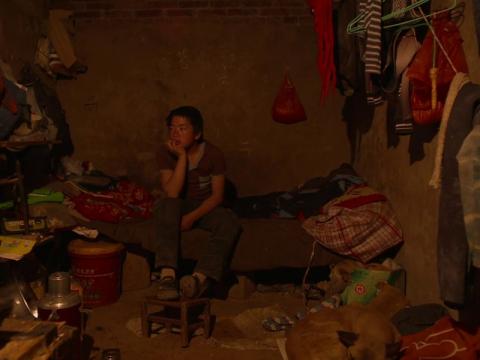
In 2018, Wang Bing stayed in Ghent as an “Artist in Focus” in the context of the Courtisane film festival. In the margins of the festival, students and former students of the KASK School of Arts Ghent invited Wang Bing to talk about filmmaking and to cook noodle soup with dumplings together. The director kindly agreed. The conversation that followed was shaped and guided by film fragments shown in between the questions. (...) The following text is an edited transcription of a part of this conversation and deals with filmmaking from the position of the filmmaker.

In 2006, Michael Mann made his ninth film. Miami Vice, a dark fresco devoted to the lives of two undercover agents, depicts in violent detail the effects of the globalisation of crime and the collusion between politics and economics, indeed the absorption of one by the other. It is Mann at his artistic peak, occupying a privileged position in Hollywood: both respected by the “milieu” and a valued asset of the industry, he once again demonstrates his ability to bend the logic of the blockbuster (Miami Vice being puffed up as such) to a personal universe to the extent that we sometimes have the impression of a large-scale misappropriation of funds (the film cost more than $150 million) for the benefit of a radical work that does full justice to the formal and stylistic ambitions of its maker.
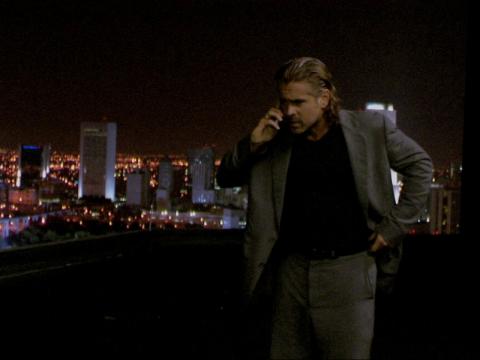
In 2006 regisseert Michael Mann zijn negende film. Miami Vice, een duister fresco over het leven van twee undercoveragenten, geeft in gewelddadig detail de gevolgen weer van de mondialisering van de criminaliteit en de collusie tussen politiek en economie, of zelfs het opgaan van het ene in het andere. Mann is op dat moment op het toppunt van zijn artistieke kunnen en bekleedt een bevoorrechte positie in Hollywood: als gerespecteerd figuur in het “milieu” en vaste waarde binnen de industrie demonstreert hij eens te meer zijn vermogen om de logica van de blockbuster (en dat is hoe Miami Vice wordt aangeprezen) om te buigen tot een persoonlijk universum, zodat we soms zelfs de indruk krijgen dat het hier om een grootschalige verduistering van fondsen gaat (de film kostte meer dan 150 miljoen dollar) ten voordele van een radicaal werk dat geen enkele toegeving doet aan de vormelijke en stilistische ambities van zijn maker.

Twee weken geleden overleed de Belgische producer, regisseur, televisiepionier en presentatrice Annie Declerck (1934-2021). In 1997 spraken Marianne Van Kerkhoven en Pascal Gielen met Annie Declerck voor het theatertijdschrift Etcetera. Vier decennia lang heeft zij (theater)kunstenaars geïnterviewd en hun werk gefilmd, eerst voor het NIR, dan de BRT en nog later de BRTN. Zo groeide een indrukwekkend beeldarchief dat ons in het buitenland wordt benijd. Zal de ‘VRT’ het belang van dat archief erkennen? Kan er nog verder beknibbeld worden op de culturele berichtgeving bij de openbare omroep?

Loredana Bianconi Introduces Her Film
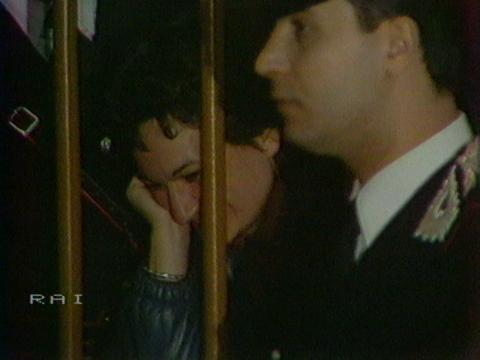
In Italy, in the mid-seventies, Adriana, Barbara, Nadia and Susanna were 20 years old when they decided to join the Red Brigades, often seen as the largest communist terrorist organization in post-war Italy. After having returned after many years in prison, filmmaker Loredana Bianconi films these four women as they try, each one of them, to recount their own experiences. In Do You Remember Revolution (1997) they speak about the political reasons which initially sustained them, the conflicts, the doubts, and the moments of being torn apart which market out their lives as women caught up in the vortex of war. Bianconi: “A journey that leads to the condemnation of armed struggle and the pain caused by the destruction of lives – the lives of victims and their own.”
Loredana Bianconi introduit son film
En Italie, au milieu des années 70, Adriana, Barbara, Nadia et Susanna ont 20 ans quand elles décident d’entrer dans la lutte armée, de quitter leur vie sociale et leur famille pour faire de la révolution le centre et le but de leur existence. Elles rejoignent les Brigades rouges, considérées comme la plus grande organisation terroriste communiste d’après-guerre en Italie, et y deviennent des personnages clés. Après de longues années de prison, la réalisatrice Loredana Bianconi filment les quatre femmes alors qu’ils essayent de raconter chacune leur propre expérience. Dans Do You Remember Revolution (1997), elles parlent des raisons politiques qui les ont d’abord soutenues, des conflits, des doutes, des déchirures qui ont marqué leur vie de femme prise dans le tourbillon de la guerre. Bianconi : Un parcours qui débouche sur la condamnation de la lutte armée et sur la douleur due à la destruction de vies : celle des victimes et la leur.
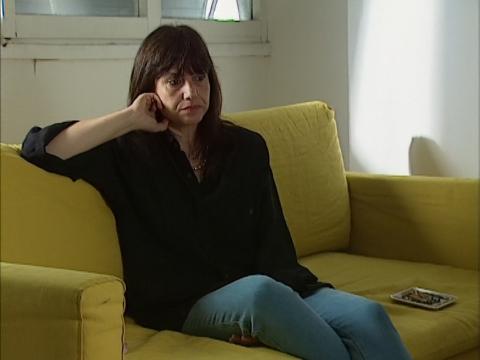
This is not one of the films I am used to. This one has no subject but rather an experience talked about by four collocutors. What we have in front of us are, simply, the answers: four women activists and one more – the one with the camera, asking questions. The difference between this and the other films I’ve seen becomes visible especially when we compare this art piece to other motion picture films which deal with the same topic.
Interview with Dion Beebe, cinematographer of Miami Vice
Michael Mann was one of the first filmmakers working in Hollywood to embrace the digital. After earlier experiments with HD in Collateral (2004) and Ali (2001), Mann resolutely opts for the digital format in his 2006 Miami Vice. In this interview, Miami Vice’s cinematographer Dion Beebe explains that the choice of digital came not from practical concerns but through an experimental search, guided by Mann’s intent of the film. The interview bears witness to this turning point in film history where digital cinema still had to come to terms with itself, still had to start believing in its own possibilities.

Veit Harlans Opfergang
In juli 1943 noteert de propagandachef van de nationaal-socialistische partij Joseph Goebbels in zijn dagboek over de film Opfergang van Veit Harlan: “Buitengewoon goed uitgevoerd qua kleur. Jammer genoeg is het verhaal, zoals dat van Immensee, een beetje te zwaar aangezet. (...) Hij begeeft zich op een pad dat niet veel succes lijkt te beloven. Hij moet terug naar de realiteit gebracht worden.” Als er ooit iemand alle zin voor realiteit kwijt was, is het wel Goebbels, om nog maar te zwijgen over zijn vriend Hitler, maar hier had Goebbels een punt. Opfergang heeft inderdaad iets delirants en daar dragen de schwärmerische koren zeker toe bij.

The western used to be the secret garden of male imagination. Access to it has been closed off, the paradise parceled out, its inhabitants dispossessed. Next up are “the men who like technology”, but cowboys like horses, landscapes, showdowns. For this, freedom is the condition, reward and punishment.

In de jaren zestig en zeventig publiceerde de Belgische auteur, criticus en filmmaker Eric de Kuyper over film in Streven. Uit deze bijzondere collectie teksten herpubliceert Sabzian een aantal markante teksten voorzien van een nieuw commentaar door De Kuyper. De Kuyper: “Au hasard Balthazar bespeelt een bijna onmogelijke spagaat tussen het al te evidente betekenisvolle (de allegorie) en het omgekeerde ervan: het betekenisloze. Iets onvatbaars, hoewel het op de meest concrete manier aanwezig is: in beelden.”
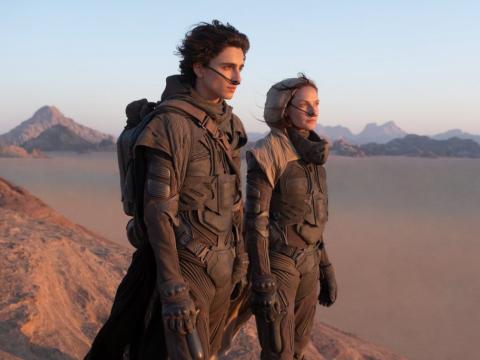
The desert aesthetic in question recurs across Villeneuve's oeuvre, from Blade Runner to Arrival, but it ultimately refers to one of his main sources of inspiration: the ‘Dune’ series written by American science fiction author Frank Herbert, which began to dominate the American West Coast and then took the alternative book circuit by storm in the late 1970s. For years, the director dreamed of bringing Herbert to the big screen, with enough financial clout and logistical support – an arsenal only a major studio could offer him. In the autumn of 2021, after some obligatory COVID delays, the day came: a childhood dream come true.

De esthetiek van de woestijn dook al meermaals op in Villeneuves oeuvre, van Blade Runner tot Arrival, maar verwijst uiteindelijk naar een van zijn voornaamste inspiratiebronnen: de Dune-reeks van de Amerikaanse sciencefictionauteur Frank Herbert, die eind jaren zeventig eerst de Amerikaanse westkust en daarna het alternatieve boekencircuit begon te domineren. Al jaren droomde de regisseur ervan om Herbert te verfilmen met genoeg financiële slagkracht en logistieke ondersteuning – een arsenaal dat alleen een grote studio hem zou kunnen bieden. In het najaar van 2021, na de obligate COVID-vertragingen, was het zover: een jeugddroom ging in vervulling.
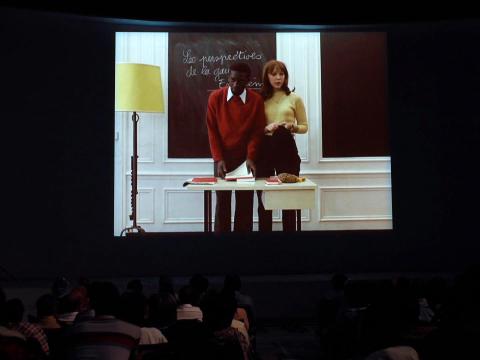
Omtrent Juste un mouvement
Het speelfilmdebuut van Vincent Meessen opent op de campus van de Universiteit van Nanterre, schijnbaar bezet door Godard. Het is een bricolage van de Brusselse kunstenaar-filmmaker. Hij lijmt buitenopnames van het schoolterrein en de naburige metrohalte aan interieurshots gemaakt in het plaatselijke Théâtre des Amandiers toen Godard er eind 2019 een tentoonstellingsparcours bouwde rond zijn meest recente film, Livre d’images. Een zwarte man met camera speelt min of meer voor gids. Met hem kijken we in verschillende ruimtes mee naar fragmenten uit verschillende onbenoemde filmwerken terwijl de Franse meester in al evenveel ongelabelde audiosnippers orakelt over le cinéma.
Farocki’s scope was broad. There was a lot of ground covered and many issues explored in the trajectory from early 16-millimeter films like Die Worte des Vorsitzenden [The Words of the Chairman] (1967), which protests the shah of Iran’s official visit to Berlin, to his last multiscreen sculptural installation, Parallel I–IV (2012–14), which examines the development of the virtual world of video games and their relationship to space. Indeed, surveying Farocki’s oeuvre serves as a revealing case study of the history of experimental filmmaking in Europe in the past half-century.
Gedachten bij Harun Farocki’s Bilder der Welt und Inschrift des Krieges
Bilder der Welt und Inschrift des Krieges is een sleutelwerk uit het oeuvre van Harun Farocki en werd oorspronkelijk opgestart als een project over de geschiedenis van de arbeid. Maar onvermijdelijk lijk je dan uit te komen bij oorlog. De film toont hoe beide geschiedenissen met elkaar zijn verstrengeld, elkaar voortstuwen en teren op dezelfde technologische vooruitgang.
Interview met Nina de Vroome over Globes
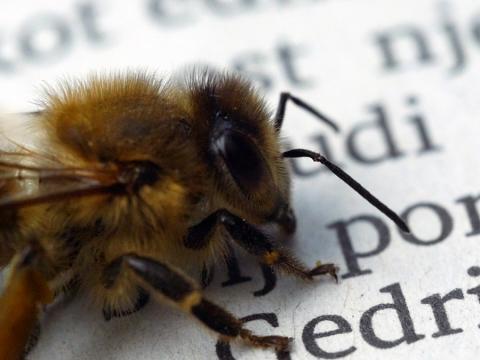
De filmpraktijk is voor De Vroome zowel een alibi voor ontmoetingen als een levensmodus. Het is maar via de camera en de microfoon, via vormen, dat de wereld, een wereld, lijkt te ontstaan. In haar nieuwe film Globes bekijken we die wereld vanuit het standpunt van bijen. De Vroome: “In de kleuren van de raten zie je het landschap weerspiegeld. Iedere cel in de raat heeft een andere kleur, door de pollen van verschillende bloemen. De raat biedt een beeld van het landschap, van de wereld rondom. Dat is één manier van kijken die de bijen aanreiken. De film is een verzameling van visies op het landschap, de cultuur en de geschiedenis die samen een soort lappendeken vormen.”
Omtrent La chinoise
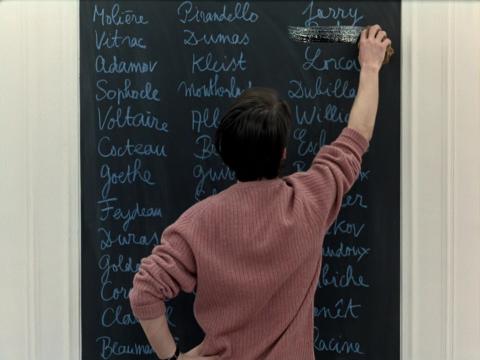
Een van mijn favoriete stukken over een van mijn favoriete filmmakers heet simpelweg Jean-Luc Godard. De Amerikaanse schilder, filmcriticus en auteur Manny Farber schreef het in 1968. Ik las het ongeveer dertig jaar na datum in Negative Space, de bundeling van zijn beste stukken uit die periode. Sindsdien schiet me bij het bekijken van een film van JLG geregeld de slotzin van het artikel te binnen: “In short, no other film-maker has so consistently made me feel like a stupid ass.” (...) In bevlogen proza laat Farber zich schamper uit over Godards productieve sixties-output, die hij met stijgende ergernis merkbaar op de voet heeft gevolgd en maar wat graag haat. De spreekwoordelijke druppel die aanleiding geeft tot balansopmaak: La chinoise.

André Bazin is sometimes called “the inventor of film criticism”. Entire generations of film critics and filmmakers, especially those associated with the Nouvelle Vague, are indebted to his writings on film. Film opens a “window on the world”, according to Bazin. His writings would also be important for the development of the auteur theory. Bazin: “Let’s face it, westerns aren’t taken seriously! Sure, there is no shortage of intellectuals declaring their love of westerns. One hears plenty of distinguished old gentlemen proclaiming it loudly. But even without looking for the posturing this declaration of faith entails (ask for titles and you will find that these self-proclaimed “western lovers” only see one or two a year!), one can be almost certain that it is based on a misunderstanding.”